Project Iceworm: The Nuclear Missile Base Planned Under Greenland's Ice
Camp Century was presented to the world as a polar research station dug into Greenland's ice sheet. Behind it was a secret U.S. Army plan, Project Iceworm, to hide hundreds of nuclear missiles in tunnels under the ice. The base was real, the missile plan was real, and it was abandoned because the ice would not stay still.
Verdict: Confirmed. This one really happened. The core events are documented in the official records and reporting cited below. How we rate stories
The Story
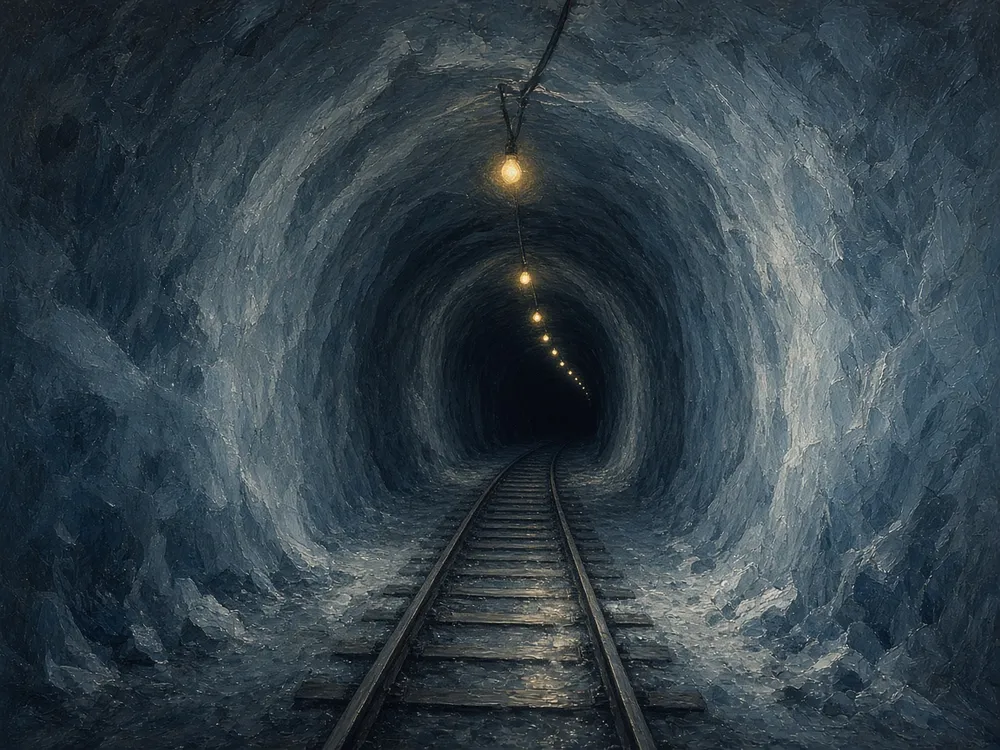
Most secret bases in conspiracy theories are imaginary. Camp Century was not. In the early 1960s, the U.S. Army dug a network of tunnels into the ice sheet of northwest Greenland and powered it with a portable nuclear reactor.
According to National Geographic, the reactor started up in October 1960. The base sat about 127 miles from the U.S. air base at Thule and could house up to 200 people. Publicly it was a showcase of polar engineering and science, and the Army made films boasting about life under the ice.
A "rather fantastic project" to hide missiles in tunnels under the ice. (Greenland during the Cold War, DUPI study)
The bigger plan was kept quiet. The Army's Project Iceworm proposed using the ice sheet to hide nuclear missiles. Historian Nikolaj Petersen's study in the Scandinavian Journal of History describes a proposal for up to 600 medium-range missiles under the Greenland ice cap, moved around a vast tunnel network so the Soviet Union could not target them. A Danish study of Greenland in the Cold War, hosted online by Columbia University, calls it a "rather fantastic project."
Camp Century was, in effect, the test. National Geographic says the base was used to study the ice's "unique adaptability" for such a scheme, and that the plan was "unknown even to Greenland's Danish government." Historians still argue about exactly what Danish officials knew and when, so that last point is best treated as National Geographic's account rather than settled fact.
The ice itself ended the idea. Glacial ice flows and deforms. The tunnels kept closing in and had to be constantly trimmed. National Geographic reports that the reactor was shut down in 1963 and the base was abandoned a few years later. Iceworm never went beyond the planning stage, and no missiles were ever placed there.
The full story reached the public mainly in the 1990s, when Danish investigations into U.S. nuclear activity in Greenland brought old documents to light. That is why Iceworm often appears in lists of conspiracy theories that turned out to be true.
Camp Century left two legacies. One is scientific. Researchers drilled an ice core there in 1966 that later revealed, according to National Geographic, that the area had been free of ice around 400,000 years ago. That finding matters for how Greenland's ice may respond to a warming climate.
The other is waste. When the Army left, it left the base's infrastructure and waste in the ice. As the ice sheet changes, scientists and Greenland's government have raised concerns about what may eventually emerge.
Origins
The U.S. built Camp Century in northwest Greenland, a Danish territory, at the start of the 1960s. Details of the linked Iceworm missile plan became widely known in the 1990s after Danish inquiries into Cold War nuclear policy in Greenland.
The Claims
- The U.S. built a nuclear-powered city inside Greenland's ice sheet.
- It was a cover for a secret plan to hide nuclear missiles under the ice.
- Denmark was kept in the dark.
Key Evidence
- National Geographic reports that Camp Century's portable nuclear reactor started in October 1960 and that the base could house up to 200 people.
- Historian Nikolaj Petersen's peer-reviewed study in the Scandinavian Journal of History documents the Army's Iceworm proposal for up to 600 medium-range missiles under the ice cap.
- A Columbia University-hosted study of Greenland in the Cold War describes Iceworm as a "rather fantastic project" to put missiles in covered tunnels.
The Evidence Against
- Iceworm was never built. No missiles were deployed at Camp Century.
- How much Danish officials knew is debated by historians. National Geographic says the plan was unknown to the Danish government; other research describes a more complicated picture.
- Camp Century did carry out real science, including drilling an ice core that is still studied today.
Documents & Sources
- NewsWhat this secret nuclear base in Greenland can tell us about climate change (National Geographic, 2025) nationalgeographic.com ↗
- AcademicNikolaj Petersen, "The Iceman That Never Came: 'Project Iceworm', the search for a NATO deterrent, and Denmark, 1960–1962" (Scandinavian Journal of History, 2008) tandfonline.com ↗
- AcademicGreenland during the Cold War (Danish Institute of International Affairs study, via Columbia International Affairs Online) ciaotest.cc.columbia.edu ↗
Each link was checked for availability on Oct. 27, 2026. Links open in a new tab.