Havana Syndrome: Secret Weapon or Something Else?
Since U.S. diplomats in Havana first reported strange sounds, head pressure and dizziness, hundreds of American officials worldwide have described similar episodes. Some believe a foreign power is attacking them with a directed-energy weapon. U.S. intelligence says that is very unlikely overall, NIH scans found no brain injury, but two agencies say it cannot be ruled out.
Verdict: Unproven. The sources below do not establish this claim. That is not the same as proving it false. How we rate stories
The Story
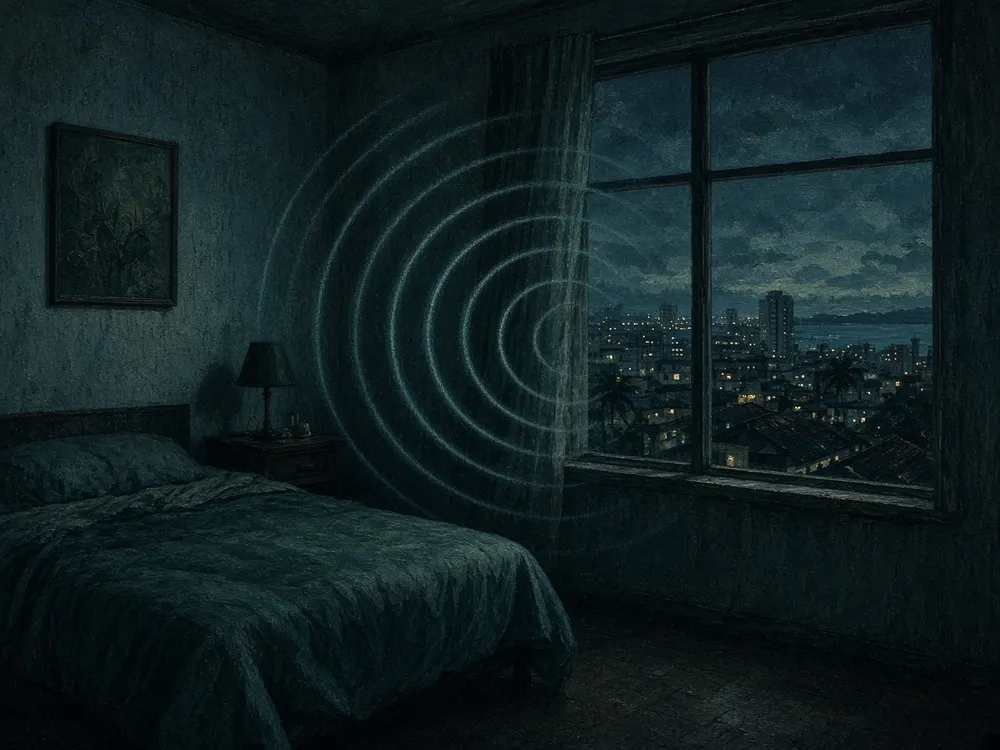
It usually begins with a sound. People describe a piercing noise or a sense of pressure in the head, often at home or in a hotel room. Then come headaches, dizziness, trouble concentrating and, for some, symptoms that last for years.
The first reports came from U.S. government personnel stationed in Havana, which is why the episodes became known as "Havana Syndrome." The U.S. government prefers the term "anomalous health incidents," or AHIs. Similar reports have since come from American diplomats, spies, soldiers and their families in many countries.
"These symptoms are very real." (Dr. Leighton Chan, NIH Clinical Center, 2024)
The conspiracy theory is that a foreign power, often said to be Russia, is attacking them with a device that fires pulsed microwaves or other energy. It is not a fringe idea. Many of those affected believe it strongly, and so do some members of Congress. In December 2024, the Republican-led House Intelligence Committee issued a report saying it was "increasingly likely" that a foreign adversary was behind some episodes.
There is some support for the idea within government. CNN reported that an expert panel convened by the intelligence community had found that "pulsed electromagnetic or acoustic energy" could explain a small subset of cases. In January 2025, an updated intelligence assessment revealed that two agencies had shifted their views after new intelligence suggested a foreign country's directed-energy research was "making progress."
One of those agencies judged there was a "roughly even chance" that a foreign actor had used a novel weapon against a small number of victims. The other judged a "roughly even" chance that such a weapon existed, but that it was unlikely to have been used against Americans. Both judgments were made with low confidence, CNN reported.
The rest of the intelligence community disagreed. The overall assessment remained that it was very unlikely a foreign actor caused the symptoms. "All IC components agree that years of IC collection, targeting and analytic efforts have not surfaced compelling intelligence reporting that ties a foreign actor to any specific event," an official told CNN. The official said some intelligence pointed the other way, with foreign adversaries privately expressing surprise or denying involvement.
Medical research has not found a clear physical signature either. In March 2024, NIH researchers published two studies in JAMA after evaluating more than 80 people who reported incidents, alongside healthy controls. They found "no significant evidence of MRI-detectable brain injury" and no differences in most clinical measures. Forty-one percent of the AHI group met criteria for functional neurological disorders or had significant somatic symptoms.
The researchers were careful about what that means. "These symptoms are very real, cause significant disruption in the lives of those affected and can be quite prolonged, disabling and difficult to treat," said Dr. Leighton Chan of the NIH Clinical Center. Dr. Carlo Pierpaoli, lead author of the imaging study, added that the lack of MRI findings "does not exclude that an adverse event impacting the brain occurred at the time of the AHI."
Many people affected reject the government's conclusions and see them as a cover-up, CNN reported. Because most of the evidence remains classified, outsiders cannot weigh it for themselves.
That leaves the theory in an uncomfortable middle. The suffering is real and officially acknowledged. A secret weapon has not been proven, and most U.S. intelligence agencies doubt it. But two agencies say it is possible in a small number of cases, and research is continuing. For now, the honest verdict is unproven.
Origins
The U.S. government calls the episodes "anomalous health incidents" (AHIs). According to NIH, they were nicknamed "Havana Syndrome" because U.S. government personnel stationed in Havana were the first to report them.
The Claims
- A foreign adversary, often said to be Russia, is targeting U.S. officials with a pulsed energy or microwave weapon.
- The attacks cause lasting brain injury.
- The U.S. government is downplaying the evidence.
Key Evidence
- In January 2025 two U.S. intelligence agencies said there was a "roughly even chance" that a foreign actor had or had used a novel weapon, according to CNN, though both judgments were made with low confidence.
- A panel of experts convened by the intelligence community earlier found that "pulsed electromagnetic or acoustic energy" could plausibly explain a subset of cases, CNN reported.
- The Republican-led House Intelligence Committee said in a December 2024 report it was "increasingly likely" a foreign adversary was involved.
The Evidence Against
- The broader U.S. intelligence assessment, released in January 2025, judged it very unlikely that a foreign actor caused the symptoms.
- An official told CNN that all intelligence agencies agree there is no compelling reporting tying a foreign actor to any specific incident.
- NIH studies published in JAMA in 2024 found no significant evidence of MRI-detectable brain injury among more than 80 people who reported incidents.
Documents & Sources
- Gov DocumentOfficial RecordNIH studies find severe symptoms of "Havana Syndrome," but no evidence of MRI-detectable brain injury or biological abnormalities (NIH, 18 March 2024) nih.gov ↗
- Gov DocumentDeclassified DocumentUpdated Assessment of Anomalous Health Incidents (Office of the Director of National Intelligence, released January 2025, PDF) dni.gov ↗
- NewsNew intelligence suggests 'Havana Syndrome' possibly caused by foreign weapon; overall assessment remains 'very unlikely' (CNN, 10 Jan 2025) cnn.com ↗
Each link was checked for availability on Oct. 27, 2026. Links open in a new tab.