The Death of Dag Hammarskjöld: Accident or Attack?
UN Secretary-General Dag Hammarskjöld died when his plane crashed near Ndola in what is now Zambia in 1961, on a peace mission to the Congo. An early inquiry pointed to pilot error, but questions never went away. In 2024 a UN-appointed investigator said it remains plausible that an external attack or threat caused the crash.
Verdict: Unproven. The sources below do not establish this claim. That is not the same as proving it false. How we rate stories
The Story
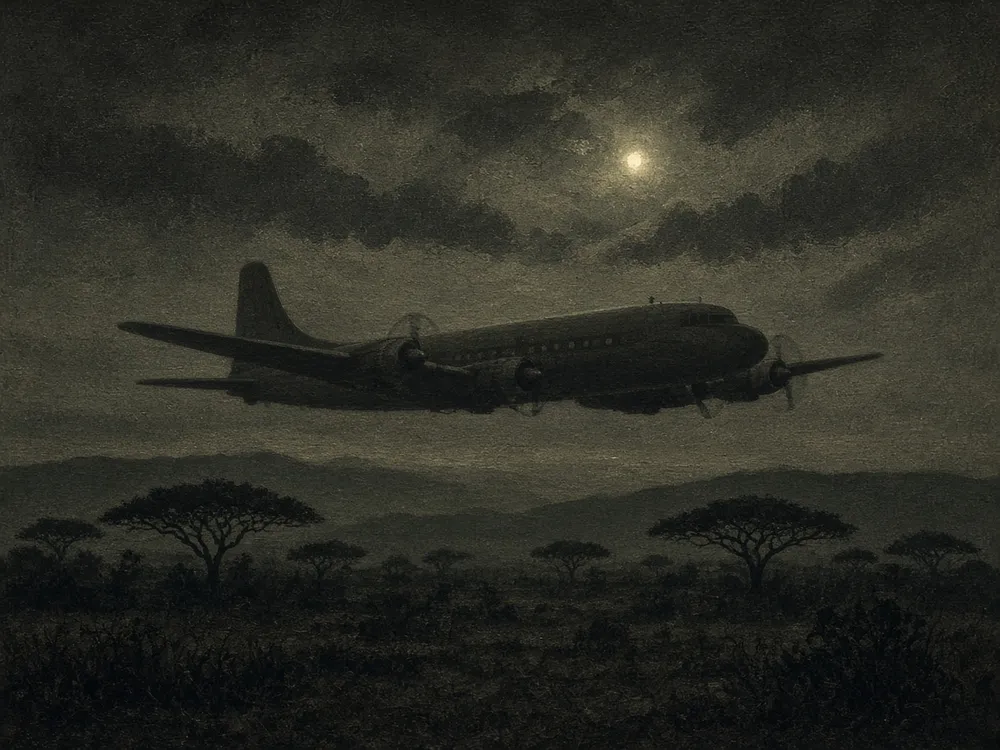
Shortly after midnight on 17–18 September 1961, a chartered Douglas DC-6 registered SE-BDY crashed in the bush near Ndola, in what was then Northern Rhodesia and is now Zambia. On board was Dag Hammarskjöld, the Secretary-General of the United Nations. He was 56.
According to UN News, 14 of the 15 people aboard died on impact, and the sole survivor died of injuries a few days later.
It remains "plausible that an external attack or threat was a cause of the crash." (UN Eminent Person Mohamed Chande Othman, 2024)
Hammarskjöld was on his way to negotiate a ceasefire between UN peacekeepers and separatists from Katanga, a breakaway region of the newly independent Congo. The Congo crisis was a Cold War flashpoint. That context is a big part of why so many people suspected his death was no accident.
An initial inquiry by Rhodesian authorities reportedly blamed pilot error. The finding was disputed. Over the years, eyewitness accounts described several scenarios, according to UN News: that "more than one aircraft," possibly a jet, was seen in the air, that the plane "was on fire before it crashed," or that it "was fired upon or otherwise actively engaged" by another aircraft.
The UN General Assembly has ordered a series of inquiries. The most recent was led by Mohamed Chande Othman, a former Chief Justice of Tanzania, appointed as the UN's "Eminent Person" on the case. In October 2024, Secretary-General António Guterres sent Othman's latest report to the Assembly.
The UN said "significant new information" had come in. It included probable intercepts by Member States of communications related to the crash, details of the ability of Katanga's forces or others to attack the plane, and the involvement of foreign paramilitary or intelligence personnel in the area at the time.
Othman's conclusion was cautious but striking. He assessed it "to remain plausible that an external attack or threat was a cause of the crash," UN Deputy Spokesperson Farhan Haq said. The alternatives that still appear possible, Othman noted, are sabotage or unintentional human error.
He also judged it "almost certain" that specific, crucial and still-undisclosed information exists in the archives of some Member States, and said some had not responded to his queries. The Secretary-General personally followed up and called on governments to release their records. The UN has not publicly named which countries it believes hold them.
Hammarskjöld remains a revered figure at the UN. He is the only person to have been awarded the Nobel Peace Prize posthumously. More than six decades after his death, the official position is not that the crash was an accident, nor that it was an assassination. It is that the full truth has not been established, and that some governments probably know more than they have said.
Origins
Eyewitness accounts gathered over the years described another aircraft in the sky and the plane being on fire or fired on before it crashed, according to UN News. A series of UN inquiries has followed.
The Claims
- Hammarskjöld's plane was shot down or forced down by another aircraft.
- Foreign intelligence agencies or mercenaries were involved.
- Governments are still hiding records that would explain what happened.
Key Evidence
- In October 2024, the UN's Eminent Person, former Tanzanian Chief Justice Mohamed Chande Othman, assessed that it "remain[s] plausible that an external attack or threat was a cause of the crash."
- New information submitted to his inquiry included probable intercepts of communications related to the crash and the presence of foreign paramilitary or intelligence personnel in the area, according to the UN.
- Othman judged it "almost certain" that crucial, undisclosed information exists in the archives of some Member States.
The Evidence Against
- An initial inquiry by Rhodesian authorities attributed the crash to pilot error, according to UN News.
- Othman said sabotage and unintentional human error remain possible alternative explanations.
- No inquiry has identified who, if anyone, attacked the plane.
Documents & Sources
- NewsMystery still surrounds death of revered UN chief Hammarskjöld, 63 years after tragic plane crash (UN News, 18 Oct 2024) news.un.org ↗
- Gov DocumentOfficial RecordStatement attributable to the Spokesperson for the Secretary-General on the report of the Eminent Person (United Nations, 18 Oct 2024) un.org ↗
- Gov DocumentOfficial RecordReport of the Eminent Person, UN General Assembly document (2024, PDF) hammarskjoldinquiry.info ↗
Each link was checked for availability on Oct. 27, 2026. Links open in a new tab.