Operation Mincemeat: The Dead Man Who Fooled Hitler
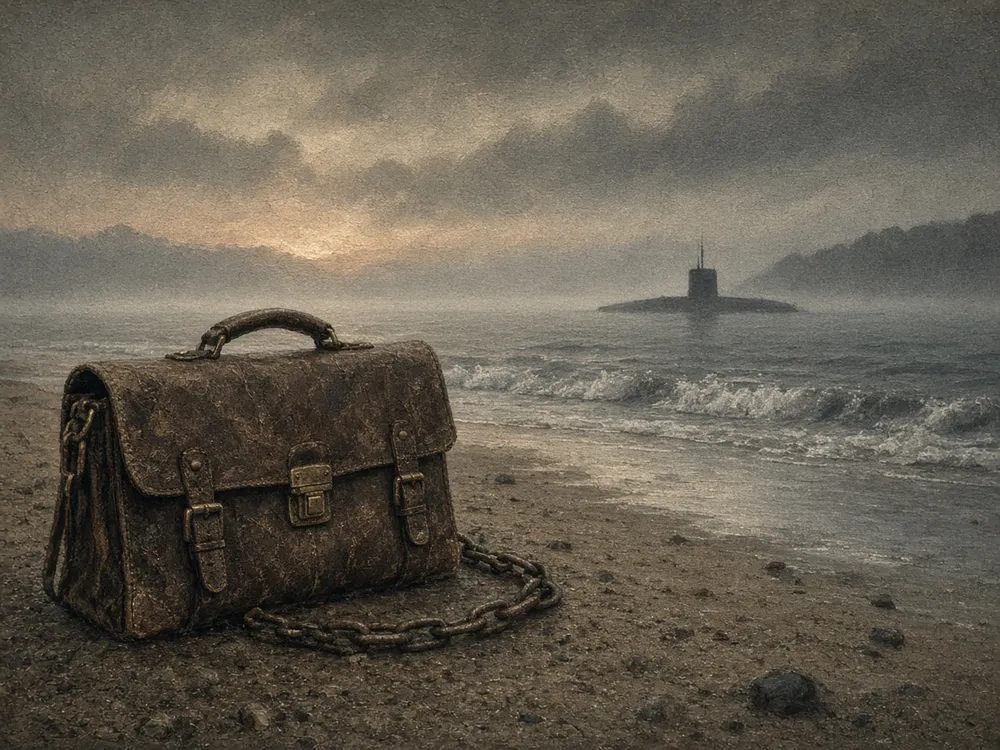
In 1943 British intelligence dressed a dead man as a fictional Royal Marines officer, gave him a briefcase of fake secret letters and let him wash up in Spain. The letters pointed to Greece and Sardinia instead of the real target, Sicily, and Germany took the bait.
Verdict: Confirmed. This one really happened. The core events are documented in the official records and reporting cited below. How we rate stories
The Story
In early 1943 the Allies had a problem everyone could see. After North Africa, the obvious next step was Sicily. The challenge was persuading Germany that the obvious answer was wrong.
The solution started as fiction. According to the National WWII Museum, a wartime British naval intelligence memo, most probably written by Ian Fleming, the future creator of James Bond, listed dozens of ways to deceive the enemy. One was to let the Germans find a corpse carrying false plans. The memo itself called this "A suggestion. (not a very nice one.)"
"My sense of humor having by this time become somewhat macabre, the word seemed to be one of good omen." (Ewen Montagu, The Man Who Never Was, 1953)
Charles Cholmondeley, an RAF officer attached to MI5, revived the idea, and naval intelligence officer Ewen Montagu was assigned to work on it with him. Montagu later explained the codename in his 1953 memoir, The Man Who Never Was. He found "Mincemeat" on the list of available Admiralty names and wrote: "My sense of humor having by this time become somewhat macabre, the word seemed to be one of good omen."
They needed a body. The Dictionary of Welsh Biography identifies the man as Glyndwr Michael, born in Aberbargoed, Monmouthshire, in 1909. After his mother died in 1940 he ended up in London, "destitute, lonely and essentially homeless," and died of poisoning on 28 January 1943. The Imperial War Museums say he had swallowed rat poison.
Michael was turned into Major William Martin of the Royal Marines. The team gave him what Montagu called "pocket litter": a photograph of a fiancée, a receipt for an engagement ring, a theatre ticket stub and letters, according to the IWM and the National WWII Museum. The key item was official correspondence suggesting the real targets were Greece and Sardinia, with Sicily only a feint.
Papers in the IWM's collection show the plan was approved on behalf of Prime Minister Winston Churchill on 16 April 1943 and that the submarine HMS Seraph was ordered to carry it out. Early on 30 April 1943, the body was launched from Seraph and left to drift just over a mile off the southern Spanish coast. It came ashore near Huelva.
Spain was officially neutral. According to the IWM, the Spanish authorities secretly opened and photographed the documents, and the contents reached German intelligence. The IWM says the Germans then doubled the number of troops sent to Sardinia and moved more divisions to Greece and the Balkans. The National WWII Museum adds that British codebreakers were reading German messages about the troop movements.
The Allies invaded Sicily on 9 July 1943 and took the island in just over a month. For decades the grave in Huelva carried only the false name. In 1997 a line was added, recorded by the Welsh Biography: "Glyndwr Michael served as Major William Martin RN."
Origins
The idea of planting false plans on a corpse appears in a wartime naval intelligence memo most probably written by Ian Fleming, according to the National WWII Museum. RAF officer Charles Cholmondeley and naval intelligence officer Ewen Montagu turned it into a real operation.
The Claims
- The British used a real corpse to deliver fake invasion plans to the Germans.
- The deception changed German troop deployments before the invasion of Sicily.
- The dead man's true identity was hidden for decades.
Key Evidence
- Papers held by the Imperial War Museums show the plan was approved on behalf of Prime Minister Winston Churchill on 16 April 1943 and that the submarine HMS Seraph was ordered to carry it out.
- The body was launched from HMS Seraph early on 30 April 1943 off the southern Spanish coast, according to the IWM, and came ashore near Huelva.
- The Dictionary of Welsh Biography identifies the dead man as Glyndwr Michael, a destitute Welshman who died of poisoning in London in January 1943. His name was added to the grave in Huelva in 1997.
The Evidence Against
- How much of the Sicily campaign's success was owed to Mincemeat is debated, since other deceptions and factors were also at work.
- Some popular retellings add details that are not in the records, such as invented backstories for Glyndwr Michael.
- The operation was secret at the time but has been openly documented since Montagu's 1953 book. It is history, not a hidden conspiracy.
Documents & Sources
- AcademicOfficial RecordWhat Was Operation Mincemeat? (Imperial War Museums) iwm.org.uk ↗
- AcademicSecret Agents, Secret Armies: Operation Mincemeat (The National WWII Museum, 2022) nationalww2museum.org ↗
- AcademicMichael, Glyndwr ('Major William Martin'), 1909–1943 (Dictionary of Welsh Biography, National Library of Wales) biography.wales ↗
Each link was checked for availability on Oct. 27, 2026. Links open in a new tab.