Operation Highjump: Did Admiral Byrd Battle a Nazi Base in Antarctica?
In 1946–47 the U.S. Navy sent a large expedition, Operation Highjump, to Antarctica. A popular theory says it was really a mission to destroy a secret Nazi base. A 2007 peer-reviewed study concluded there was no such base and that Highjump was designed to train the Navy for a possible war with the Soviet Union in the Arctic.
Verdict: Debunked. The weight of the evidence cited below contradicts this claim. How we rate stories
The Story
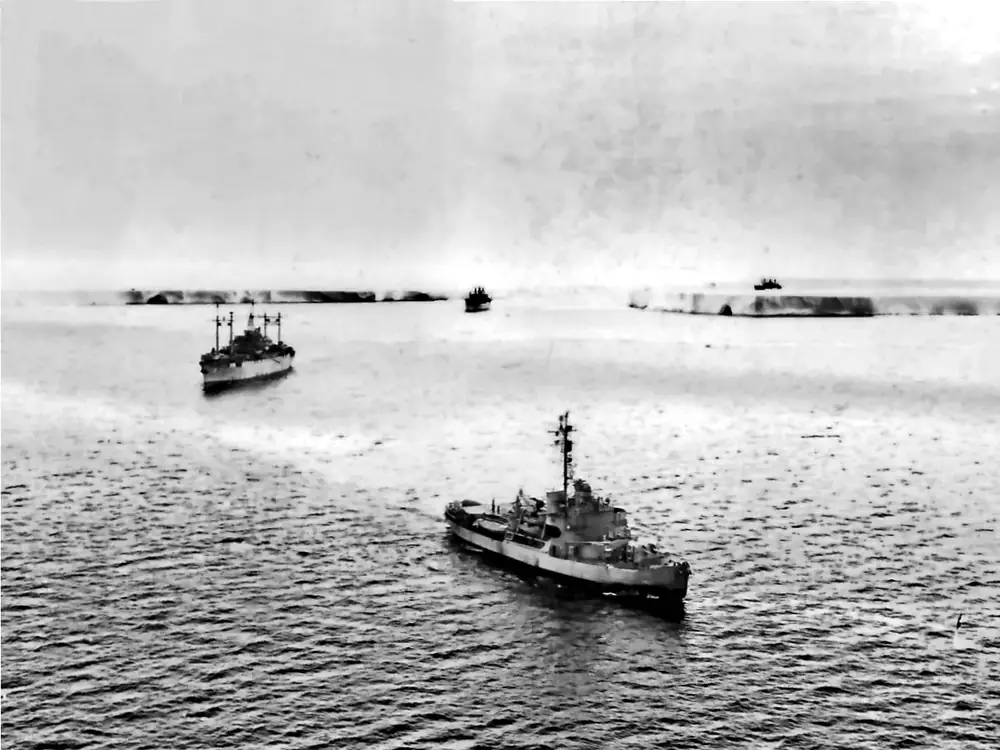
After World War II paused activity in Antarctica, the Navy went back in force. Operation Highjump, in the southern summer of 1946–1947, was organized by Rear Admiral Richard E. Byrd, who had led the first flight over the South Pole in 1929, and commanded by Rear Admiral Richard H. Cruzen, according to the National Archives. A Navy aviation history calls it 'a massive effort that included 14 ships, 4,000 men, and 25 aircraft,' among them seaplanes, ski-and-wheel R4D transports flown off the carrier Philippine Sea, and early helicopters.
Its size, and the fact that it was classified confidential, made it a magnet for speculation. The theory goes that Nazi leaders escaped by U-boat to a hidden base under the Antarctic ice and that Byrd's fleet was really sent to destroy it.
Highjump 'was designed to train the US Navy for a possible war with the Soviet Union in the Arctic, and not to attack an alleged German base in Antarctica.'
The theory borrows from real events. A German expedition did visit Dronning Maud Land in 1939, apparently intending among other things to set up a base. Two U-boats did surface in Argentina in July and August 1945, after Germany's surrender. In a 2007 paper in the journal Polar Record, Colin Summerhayes and Peter Beeching wrote that, given how little was known at first, 'it is not, perhaps, surprising' that people connected these episodes into 'a myth of a large German base existing in Antarctica and of allied efforts to destroy it.'
Working from what has been published since the 1940s, the paper concludes 'that the two U-Boats could not have reached Antarctica; that there was no secret wartime German base in Dronning Maud Land,' and that Highjump 'was designed to train the US Navy for a possible war with the Soviet Union in the Arctic, and not to attack an alleged German base in Antarctica.'
The Navy's account of the results is about exploration and equipment. 'The expedition's flights observed more than 700,000 square miles of Antarctica which were previously unexplored,' it says, and the operation proved out helicopters, rocket-assisted takeoff and ski-equipped aircraft for polar work.
Origins
The National Archives says Highjump, officially the United States Navy Antarctic Developments Program, 1946-1947, was 'organized by Rear Admiral Richard E. Byrd, Jr., USN (Ret) and led by Rear Admiral Richard H. Cruzen, USN, Commanding Officer.' A Naval Aviation News history published by the Naval History and Heritage Command calls it 'a massive effort that included 14 ships, 4,000 men, and 25 aircraft.' A 2007 paper in Polar Record notes the operation 'was classified confidential,' and argues that limited early information let people stitch it together with other events into a myth.
The Claims
- Highjump was a secret attack on a hidden Nazi base in Antarctica.
- German U-boats had carried Nazi officials or treasure to Antarctica at the end of the war.
Key Evidence
- The expedition was large and military. The Navy history lists PBM Mariner seaplanes, R4D Skytrain transports and helicopters among its aircraft.
- Some pieces of the theory are real. Polar Record notes a 1939 German expedition visited Dronning Maud Land, 'apparently with the intention inter alia of establishing a base there,' and that two U-boats arrived in Argentina in July and August 1945.
- Highjump itself was classified confidential at the time.
The Evidence Against
- Colin Summerhayes and Peter Beeching's 2007 Polar Record paper concludes 'that the two U-Boats could not have reached Antarctica; that there was no secret wartime German base in Dronning Maud Land' and that Highjump 'was designed to train the US Navy for a possible war with the Soviet Union in the Arctic, and not to attack an alleged German base in Antarctica.'
- The paper adds that classified activities 'have subsequently been declassified and it is no longer difficult to separate fact from fancy.'
- The Navy history describes the results as exploration: 'The expedition's flights observed more than 700,000 square miles of Antarctica which were previously unexplored.'
Documents & Sources
- AcademicHitler's Antarctic base: the myth and the reality, Summerhayes and Beeching, Polar Record 43(1), 2007 doi.org ↗
- Gov DocumentOfficial RecordNaval Aviation in the Antarctic, Curtis Utz, Naval Aviation News Nov–Dec 2006 (NHHC, archived PDF) web.archive.org ↗
- Gov DocumentOfficial RecordOperation Hi-jump: Exploring Antarctica with the U.S. Navy, The Unwritten Record (National Archives, 2017) unwritten-record.blogs.archives.gov ↗
Each link was checked for availability on Oct. 27, 2026. Links open in a new tab.