Watergate: The Break-In and the Cover-Up That Ended a Presidency
In June 1972, five men were arrested inside Democratic National Committee offices at the Watergate complex in Washington. Investigations by journalists, a Senate committee and a special prosecutor showed that President Richard Nixon helped cover up the break-in. He resigned in August 1974.
Verdict: Confirmed. This one really happened. The core events are documented in the official records and reporting cited below. How we rate stories
The Story
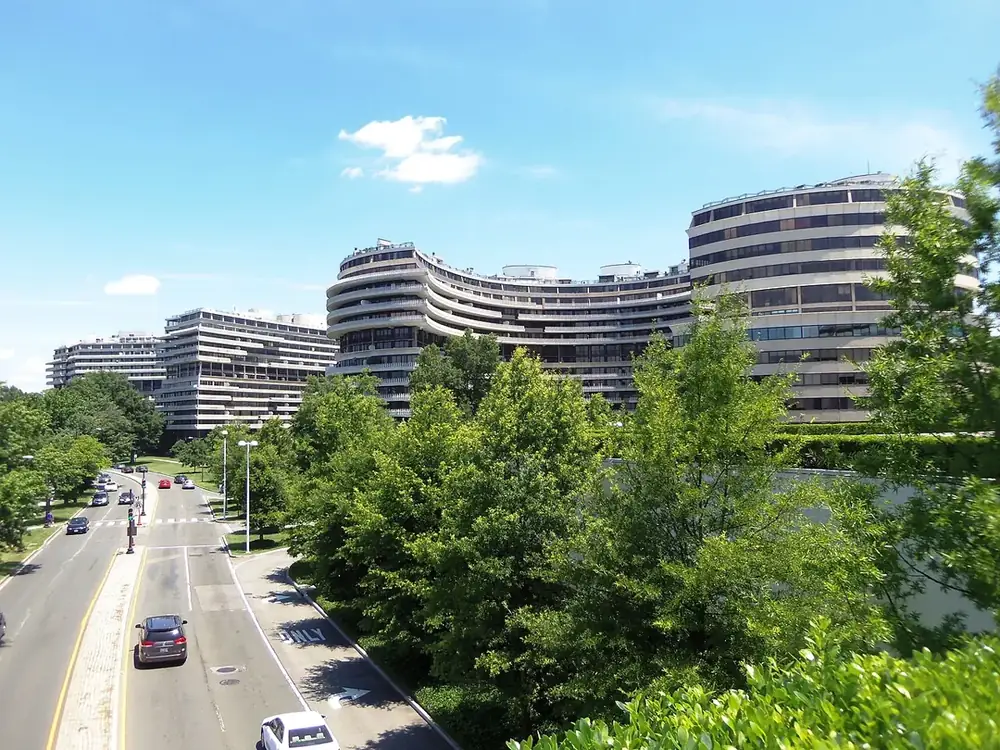
Early on the morning of June 17, 1972, a security guard at the Watergate hotel and office complex in Washington noticed something wrong and called the police. Officers found five men inside the headquarters of the Democratic National Committee. According to the U.S. Senate Historical Office, the burglars were carrying more than $3,500 in cash and high-end surveillance and electronic equipment. One of them, James McCord, was a former CIA officer who worked on security for President Richard Nixon's re-election committee.
Two days later, White House press secretary Ronald Ziegler told reporters in Key Biscayne, Florida, that he would not comment on what he called a "third-rate burglary attempt." The White House denied any connection to the break-in. That November, Nixon won re-election in a landslide.
"Play it tough. That's the way they play it and that's the way we are going to play it." (President Nixon, Oval Office, June 23, 1972)
Behind the scenes, the story was very different, and we know that because Nixon recorded it himself. On June 23, 1972, six days after the arrests, his chief of staff, H.R. Haldeman, told him in the Oval Office that the FBI's investigation was "leading into some productive areas" because agents had been able to trace the burglars' money. Haldeman relayed a plan: have the CIA's deputy director, Vernon Walters, call acting FBI Director Patrick Gray and tell the bureau to back off. Nixon agreed. "Play it tough," he said, according to the official transcript. "That's the way they play it and that's the way we are going to play it." He suggested telling the CIA officials that the case would "open the whole Bay of Pigs thing up again." That conversation became known as the "smoking gun."
What was said in that conversation stayed secret for more than two years. In the meantime, Washington Post reporters Bob Woodward and Carl Bernstein kept reporting on links between the burglars and the Nixon campaign, helped by a confidential source who became known as "Deep Throat." The trial of the burglars and two accomplices began in January 1973. Five pleaded guilty and two were convicted by a jury. Chief Judge John Sirica made clear he doubted that all the facts had come out.
On February 7, 1973, the Senate voted unanimously to create a Select Committee on Presidential Campaign Activities, chaired by Sen. Sam Ervin of North Carolina, a 76-year-old former state supreme court justice who described himself as a "country lawyer," according to the Senate Historical Office. Its hearings were broadcast live that spring, and PBS reran them in prime time. Former White House counsel John Dean testified that the President had approved plans to cover up White House connections to the break-in. Then a former aide, Alexander Butterfield, disclosed that Nixon had a voice-activated taping system in several White House rooms.
The fight over the tapes lasted a year. The committee voted unanimously on July 16, 1973, to subpoena them; Nixon refused, citing executive privilege. Special Prosecutor Archibald Cox was fired that October. His successor, Leon Jaworski, subpoenaed 64 more recordings. On July 24, 1974, the Supreme Court ruled 8-0 in United States v. Nixon that the President had to turn them over. Justice William Rehnquist did not take part.
The tapes included the June 23, 1972 conversation. According to the Senate Historical Office, the recordings revealed that Nixon had participated in devising a plan to cover up the White House connection to the break-in. By then the House Judiciary Committee had adopted three articles of impeachment. Before the full House could vote, Nixon resigned on August 9, 1974, the only U.S. President to do so.
The aftermath reshaped American law. Congress amended the Federal Election Campaign Act in 1974, strengthened the Freedom of Information Act over a presidential veto that same year, and passed the Ethics in Government Act in 1978.
One mystery lasted much longer. In 2005, The Washington Post confirmed that Deep Throat was W. Mark Felt, who had been the FBI's second-ranking official in 1972. The same tape that sealed Nixon's fate had mentioned him: on June 23, Haldeman told Nixon that Gray would call Felt in to put a hold on the investigation, because Felt "wants to cooperate." The "-gate" suffix has been attached to scandals ever since.
Origins
According to the U.S. Senate's history of the investigation, the burglars were arrested on June 17, 1972, carrying more than $3,500 in cash. Two days later, White House press secretary Ronald Ziegler declined to comment on what he called a "third-rate burglary attempt."
The Claims
- The break-in was connected to Nixon's re-election campaign and White House aides.
- The president took part in covering it up.
- A secret source helped reporters uncover the story.
Key Evidence
- The Senate created its Watergate committee, chaired by Sen. Sam Ervin, on February 7, 1973. In its televised hearings, former White House aide Alexander Butterfield revealed that Nixon had a secret taping system. The committee voted to subpoena the tapes on July 16, 1973.
- On July 24, 1974, the Supreme Court ruled unanimously in United States v. Nixon that the President had to hand over the recordings. According to the Senate Historical Office, they revealed that he had participated in devising a plan to cover up the White House connection to the break-in.
- Nixon resigned on August 9, 1974. In 2005, The Washington Post confirmed that former FBI associate director W. Mark Felt was its secret source, "Deep Throat."
The Evidence Against
- Watergate is fully documented. Several side theories about who ordered the break-in and why are still debated, and this entry does not take a position on them.
Documents & Sources
- Gov DocumentThe Senate Watergate Investigation (U.S. Senate Historical Office) senate.gov ↗
- NewsFBI's No. 2 Was 'Deep Throat' (The Washington Post, 1 June 2005) washingtonpost.com ↗
- Gov DocumentOfficial RecordTranscript of the June 23, 1972 "smoking gun" conversation, trial exhibit (Richard Nixon Presidential Library, NARA) nixonlibrary.gov ↗
- Gov DocumentWhite House Tapes (Richard Nixon Presidential Library, NARA) nixonlibrary.gov ↗
Each link was checked for availability on Oct. 27, 2026. Links open in a new tab.