The Voynich Manuscript: The Book Nobody Can Read
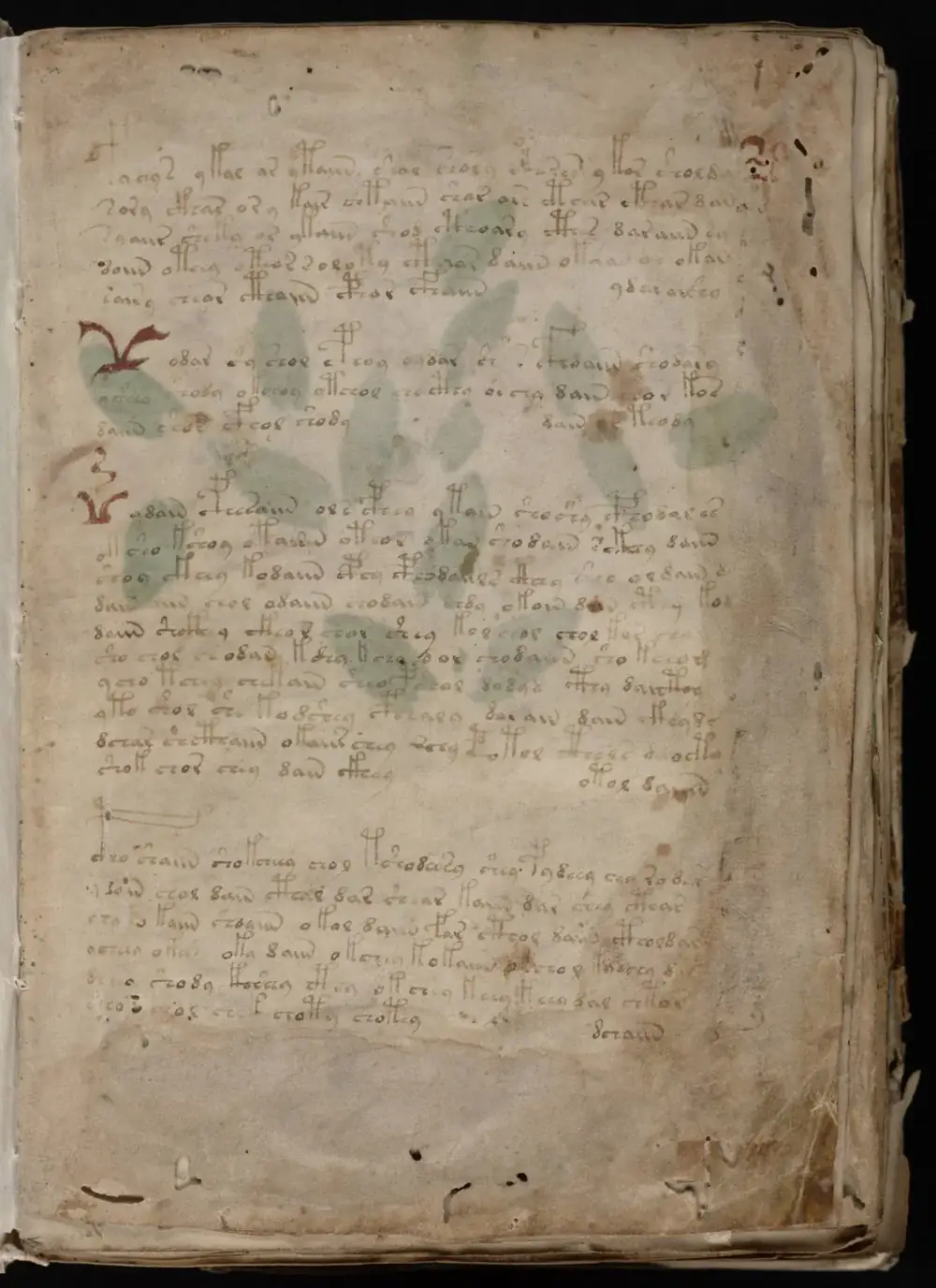
The Voynich Manuscript, Yale's Beinecke MS 408, is an illustrated book 'Written in an unidentified script by an unknown author.' No proposed decipherment has been accepted. Radiocarbon tests in 2009 dated its parchment to the early 15th century, which counts against the idea that it is a modern forgery.
Verdict: Unproven. The sources below do not establish this claim. That is not the same as proving it false. How we rate stories
The Story
In 1912 the antiquarian bookseller Wilfrid M. Voynich bought a small book from the Jesuit College at Frascati, near Rome. Its pages were covered in a flowing script that matched no known alphabet, wrapped around drawings of unidentifiable plants, astronomical diagrams and figures bathing in pools. Yale's Beinecke Library, which now owns it as MS 408, describes it as 'Written in an unidentified script by an unknown author.'
Its earlier history is partly documented. The Beinecke says its first confirmed owner was the Holy Roman Emperor Rudolph II, who 'purchased it for 600 gold ducats and believed that it was the work of Roger Bacon.' The library calls the Bacon link 'pure speculation.' It later passed through a pharmacist and an alchemist to Johannes Marcus Marci, who sent it in 1666 to the Jesuit scholar Athanasius Kircher with a letter still kept with the manuscript.
'Cryptographic approaches have failed to decipher the text, if it is indeed encoded,' says the library that owns it.
After Voynich's death it went to his wife, Ethel, then to their friend Anne Nill, who sold it in 1961 to the New York dealer H. P. Kraus. Kraus gave it to the Beinecke eight years later. The library says it has left the building only once since then.
For more than a century people have tried to read it. The Beinecke's verdict is that 'Cryptographic approaches have failed to decipher the text, if it is indeed encoded.' The failures led some to suspect a hoax, perhaps by Voynich himself.
Science weakened that theory. In 2009 a University of Arizona team led by Greg Hodgins cut tiny samples from four pages and radiocarbon-dated them. NBC News reported that the samples 'were made between 1404 and 1438.' The university said this made the book 'a century older than scholars had previously thought.' The inks themselves could not be radiocarbon-dated, but the university said their colors 'are consistent with the Renaissance palette.'
Not every question is settled. The Beinecke's own page dates the manuscript's production to 'the end of the fifteenth or during the sixteenth century' even while noting that testing suggests consistency with fifteenth-century manuscripts. Whether the book is a cipher, a lost language or an elaborate early hoax, no one has shown.
Origins
The manuscript takes its name from Wilfrid M. Voynich, who, the Beinecke Library says, bought it in 1912 from the Jesuit College at Frascati near Rome. The library calls its first confirmed owner the Holy Roman Emperor Rudolph II, who 'purchased it for 600 gold ducats and believed that it was the work of Roger Bacon.'
The Claims
- The book hides secret knowledge in a cipher.
- It records a lost natural language.
- It is a hoax, possibly forged by Voynich himself.
Key Evidence
- The Beinecke describes six sections: plant specimens, astronomical and astrological drawings, bathing scenes, cosmological medallions, pharmaceutical drawings, and unillustrated text 'possibly recipes.'
- Reporting the University of Arizona's 2009 radiocarbon work, NBC News said Greg Hodgins' team found that samples from four pages 'were made between 1404 and 1438.'
- The University of Arizona said the inks could not be radiocarbon-dated directly, but that 'the colors are consistent with the Renaissance palette.'
The Evidence Against
- The Beinecke says 'Cryptographic approaches have failed to decipher the text, if it is indeed encoded.' No proposed solution has been accepted.
- The early parchment date makes a 20th-century forgery by Voynich unlikely, since the University of Arizona says the dating put the book 'a century older than scholars had previously thought.' Dating the parchment does not by itself date the writing.
- The Beinecke calls the link to Roger Bacon 'pure speculation' and says research 'has also cast serious doubt' on claimed ownership by John Dee.
Documents & Sources
- AcademicThe Beinecke Cipher (Voynich) Manuscript (Beinecke Rare Book and Manuscript Library, Yale) beinecke.library.yale.edu ↗
- AcademicUniversity of Arizona experts determine age of book 'nobody can read' (University of Arizona via EurekAlert, Feb. 10, 2011) eurekalert.org ↗
- NewsExperts determine age of book 'nobody can read' (NBC News, February 2011) nbcnews.com ↗
Each link was checked for availability on Oct. 27, 2026. Links open in a new tab.