Tartaria and the 'Mud Flood': The Lost Empire Behind Old Buildings
An online theory claims that an advanced global empire called Tartaria built the world's grand 19th-century architecture, and that a cataclysmic 'mud flood' erased it from history. Architecture writers say the theory rests on basic misunderstandings of how buildings are made.
Verdict: Debunked. The weight of the evidence cited below contradicts this claim. How we rate stories
The Story
Scroll through enough old photographs of grand city halls, domed exhibition palaces and ornate skyscrapers and a question arises: how did people build all this so fast? For believers in the Tartaria theory, the answer is that they didn't. The buildings, they say, came from a lost worldwide empire.
The story, which spread through YouTube videos and Reddit forums from around 2016 and 2017, takes its name from 'Tartary,' an old general term for north-central Asia. Believers say the empire was erased, often by an apocalyptic 'mud flood' that buried its buildings. As proof, many point to below-grade basement windows in older buildings. They also claim world's fairs displayed Tartarian buildings before tearing them down.
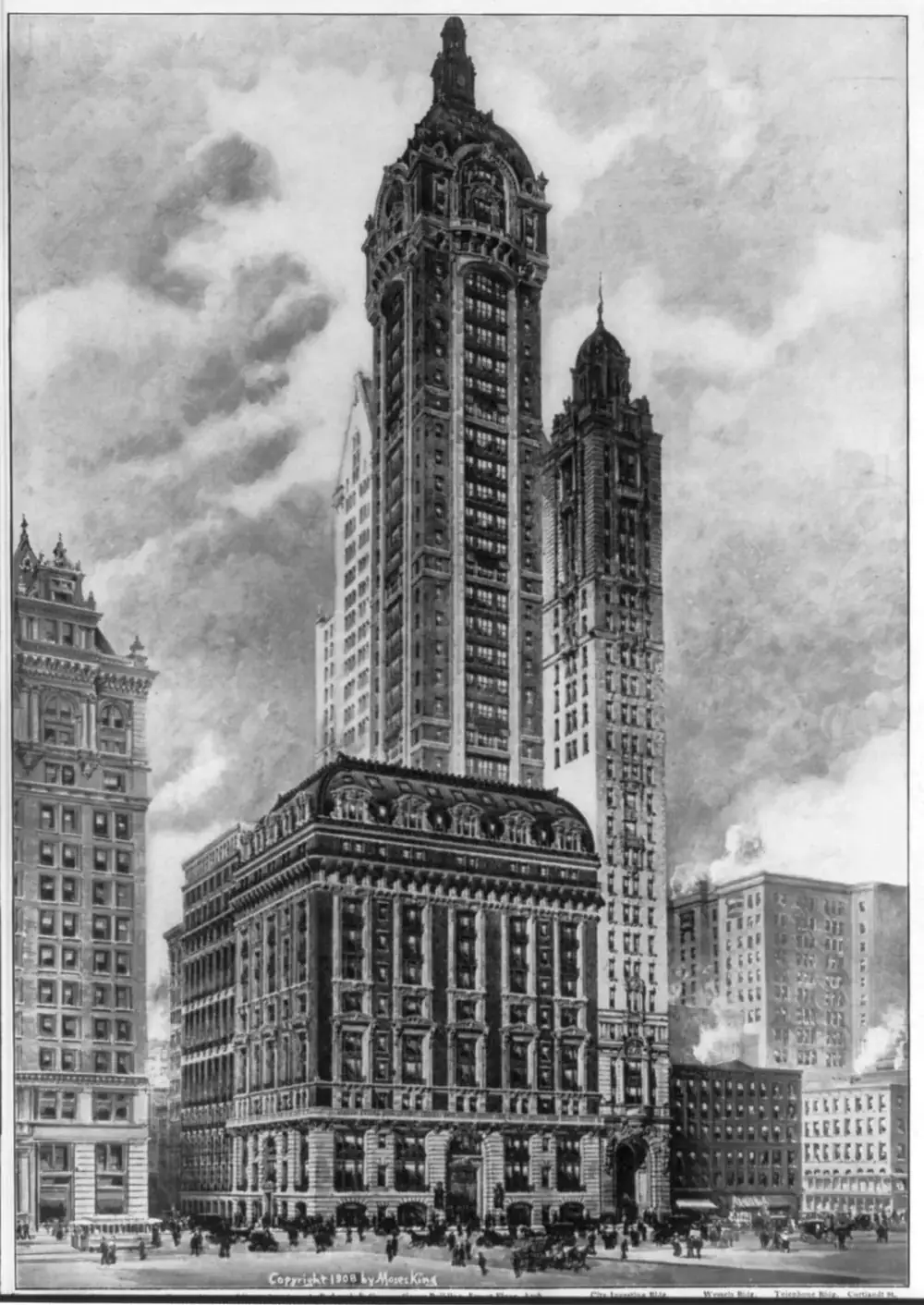
The Singer Building, a favorite 'Tartarian' example, was designed by Ernest Flagg and completed in 1908.
Architecture writers have taken the theory apart. In a 2021 CityLab feature, Zach Mortice wrote that many of its arguments 'spring from very basic misunderstandings of how the built environment works.' New York's Singer Building, a favorite example, was completed in 1908 by architect Ernest Flagg, and a book was written about its construction. The ornate pavilions of the 1893 Chicago World's Fair were temporary structures made of plaster of Paris, hemp fiber and straw.
Mortice argues the theory reflects real anxieties about how quickly the modern world, and modern architecture, replaced older styles. As history, it does not hold up.
Origins
Tartaria theory content spread on YouTube and Reddit; according to Zach Mortice's 2021 CityLab feature, citing Skeptoid, it appears to have first emerged in 2016 and 2017. 'Tartaria,' or 'Tartary,' was a general term for north-central Asia, but, as Mortice notes, never a coherent empire.
The Claims
- A lost empire, Tartaria, built ornate buildings around the world.
- A 'mud flood' buried their lower floors, which is why some old buildings have sunken basement windows.
- Historians covered up the empire, and world's fairs were used to show off and then destroy its buildings.
Key Evidence
- 'Tartary' was a real general term for north-central Asia, which theorists cite as proof of an empire.
- Some older buildings have below-grade basement windows, which theorists point to as evidence of a buried ground floor.
The Evidence Against
- In a 2021 Bloomberg CityLab feature, architecture writer Zach Mortice reported that many of the theory's arguments 'spring from very basic misunderstandings of how the built environment works.'
- New York's Singer Building, often cited by theorists, was completed in 1908 and was designed by architect Ernest Flagg. A book was written about its construction.
- Mortice notes that the lavish pavilions of world's fairs, such as Chicago's in 1893, were built as temporary structures out of plaster of Paris, hemp fiber and straw.
Documents & Sources
- NewsInside Architecture's Wildest Conspiracy Theory (Bloomberg CityLab, Zach Mortice, 27 April 2021) bloomberg.com ↗
- NewsInside the Tartarian Empire, the QAnon of Architecture (author's archived copy of the CityLab article) zachmortice.com ↗
Each link was checked for availability on Oct. 27, 2026. Links open in a new tab.