The Lost Colony of Roanoke: 'CROATOAN' and the Missing Settlers
In 1587 more than 100 English men, women and children were left on Roanoke Island, in today's North Carolina. When their governor, John White, finally returned in 1590 they were gone, with 'CROATOAN' carved into a palisade. The National Park Service says 'no one has definitively proven what happened to the Lost Colony.'
Verdict: Unproven. The sources below do not establish this claim. That is not the same as proving it false. How we rate stories
The Story
In April 1587 a group of English colonists sailed for Sir Walter Raleigh under John White. They meant to settle on Chesapeake Bay and stop at Roanoke Island only to find soldiers left behind by an earlier expedition. According to the National Park Service, the fleet's captain, Simon Fernandes, refused to take them farther, and they had to stay on Roanoke.
Things went badly from the start. The NPS says a colonist named George Howe was ambushed and killed. In retaliation White's men attacked people they took for the Roanoke tribe, but who were in fact friendly Croatoan people, until the Croatoan man Manteo, who worked with the colonists, stopped it. The bright spot was the birth of Virginia Dare, the first English-born child in the Americas. Short of food and facing winter, the colonists asked White to return to England for help. He left in late August 1587.
'No one has definitively proven what happened to the Lost Colony,' the National Park Service says.
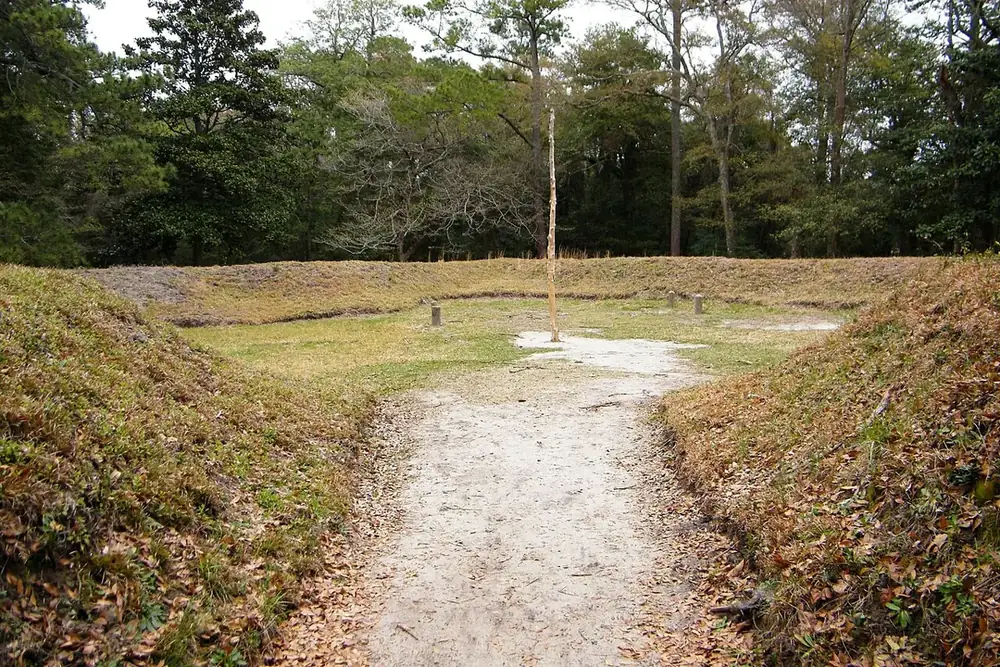
War kept him away. The Spanish Armada threatened England, and Queen Elizabeth I ordered English ships to stay home. It was not until early 1590 that White persuaded privateers bound for the West Indies to take him back. He landed on 18 August 1590. The NPS says he found 'CRO' carved into a tree and 'CROATOAN' carved into a palisade, and 'no signs of a struggle or of the colonists leaving in haste.' He tried to sail to Croatoan, but a storm forced him back to England.
Croatoan was the name of both a people and a place, today's Hatteras Island. White had told the colonists that if they left they should move 50 miles inland, and leave a message if they went anywhere else. He believed they had gone to Croatoan. He never found out.
The NPS lays out the main theories and the problems with each. White saw no hurricane damage, no graves and no sign of a Spanish attack. Jamestown settlers were later told by local Algonquian people that many of the lost colonists had died in a battle, but no archaeological evidence of the colony has turned up near the Chesapeake. Digs in Bertie County and on Hatteras Island have found English artifacts, but 'no human remains, graves, buildings, or village sites' definitively tied to the colony.
After more than four centuries, the NPS's conclusion stands: 'no one has definitively proven what happened to the Lost Colony.'
Origins
The National Park Service says John White led the colonists from England in 1587, intending to settle on Chesapeake Bay, but the fleet's captain, Simon Fernandes, refused to take them past Roanoke Island. The NPS gives the group's size as 117 on one page and 118 on another.
The Claims
- The colonists moved to Croatoan (today's Hatteras Island) and lived among the Croatoan people.
- They moved to the Chesapeake Bay or up the Albemarle Sound.
- They were destroyed by a hurricane, famine and disease, or the Spanish.
Key Evidence
- The NPS says White found 'CRO' carved into a tree and 'CROATOAN' carved into a palisade, and 'no signs of a struggle or of the colonists leaving in haste.'
- White had asked the colonists to leave a message if they moved somewhere other than 50 miles inland, according to the NPS.
- Artifacts from the period have been found on Hatteras Island and in Bertie County, inland on the Albemarle Sound.
The Evidence Against
- The NPS says that at both Hatteras and Bertie County 'no human remains, graves, buildings, or village sites' have been definitively linked to the Lost Colony, and the artifacts may have arrived through trade.
- The NPS says White found no destruction suggesting a hurricane, no graves suggesting famine or disease, and no signs of a Spanish attack.
- Jamestown colonists later heard from local Algonquian people that many of the lost colonists had died in a battle, but the NPS says no archaeological evidence of the colony has been found in the Chesapeake Bay area.
Documents & Sources
- Gov DocumentOfficial RecordThe Lost Colony (Fort Raleigh National Historic Site, National Park Service) nps.gov ↗
- Gov DocumentOfficial Record1587: The Lost Colony (National Park Service) nps.gov ↗
- Gov DocumentOfficial Record1590 Rescue Voyage (National Park Service) nps.gov ↗
- Gov DocumentOfficial RecordMajor Theories of the Lost Colony (National Park Service) nps.gov ↗
Each link was checked for availability on Oct. 27, 2026. Links open in a new tab.