Operation Sea-Spray: The Germ Test Over San Francisco
In September 1950, the U.S. Army carried out a secret biological warfare 'vulnerability' test in the San Francisco Bay area. It released Serratia marcescens and Bacillus globigii, bacteria then thought harmless, to see how a germ attack on an American city would spread. A man who later died of a Serratia infection became the center of a lawsuit, but a federal court found the test did not cause his death.
Verdict: Confirmed. This one really happened. The core events are documented in the official records and reporting cited below. How we rate stories
The Story
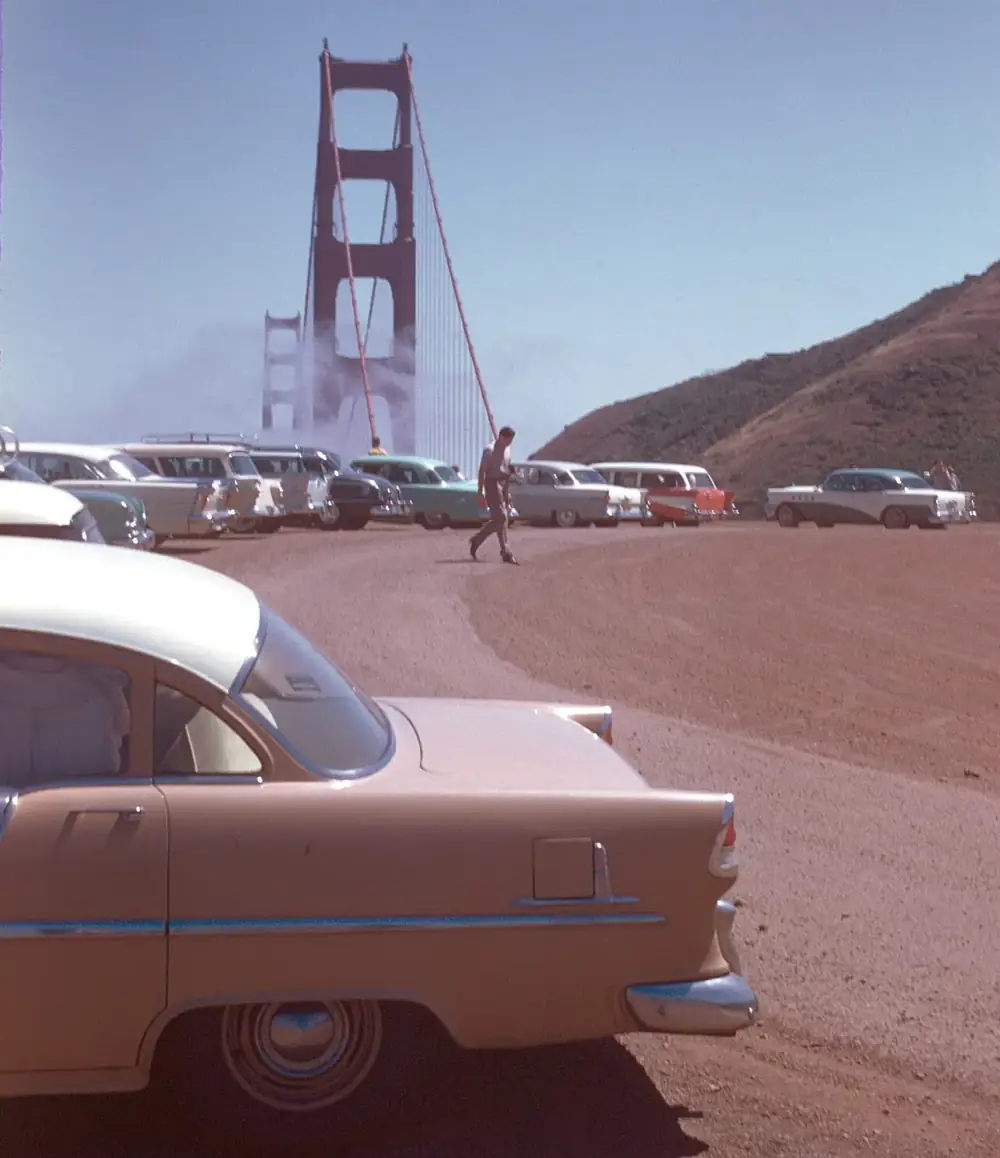
In September 1950, the Korean War was three months old and the Pentagon was worried about a quieter kind of attack: an enemy releasing germs over an American port city. To find out how vulnerable such a city would be, the Army decided to test one for real. The city was San Francisco. Its people were not told.
According to Army records printed in a 1977 Senate hearing, the test used two kinds of bacteria, Serratia marcescens and Bacillus globigii. At the time, both were treated as "simulants," which the Army defined as living organisms "not normally capable of causing infection." Serratia had a useful quirk: it makes a red pigment, which made it easy to trace.
"It was inconceivable and unconscionable, and the study should never have been conducted on the unsuspecting population." (Maryland public health official J. M. Joseph, testifying to the Senate in 1977)
The decision was made at the top. A federal appeals court later wrote that Gen. Anthony McAuliffe, the Army's chief chemical officer, chose San Francisco as the site and personally approved using Serratia after he and a fellow officer evaluated whether it was safe. The court also noted that McAuliffe himself rejected a plan to test the same strain in the New York subways.
That fall, something odd turned up at a San Francisco hospital. Doctors there later described eleven cases of infection by the same kind of organism between September 1950 and February 1951. All the patients had undergone procedures on their urinary tracts. A San Francisco man named Edward Nevin died after a Serratia infection; his family would later blame the test. The doctors published their findings in a medical journal.
The public did not learn about it for more than 25 years. In late 1976, Newsday and The Washington Post reported on the Army's tests, which the Army had confirmed. In 1977, a Senate subcommittee on health held hearings on the military's biological testing on Americans. The Army defended the San Francisco test, saying in its report that any connection to the hospital cases "appears to be coincidental" because no other hospitals reported similar findings and all the patients had urinary tract infections.
Not everyone at the hearing agreed. J. M. Joseph, who directed laboratories for Maryland's state health department, testified that by then Serratia was no longer considered a harmless organism, and that "at that time it should not have been considered as harmless, either." Whether the hospital cases were caused by the test, he said, "cannot be established with certainty." But he did not think the test was needed at all. "It was inconceivable and unconscionable," he said, "and the study should never have been conducted on the unsuspecting population."
Nevin's relatives sued the government for wrongful death. They lost. The district court found that the bacteria used by the Army did not cause his death. In 1983, the Ninth Circuit Court of Appeals ruled that the choice of bacterium was a planning-level decision protected from lawsuits and ordered the case dismissed. One judge dissented on that point, but agreed that the finding on the cause of death was not clearly erroneous.
So the conspiracy version, that the Army killed a man in San Francisco, was never proven in court. What is not in doubt is the test itself. The U.S. Army deliberately released bacteria over a major American city, without telling the people who lived there, to learn how vulnerable it would be to a biological attack.
Origins
The Army acknowledged its open-air simulant tests in late 1976, after they were reported in the press. It presented records on the San Francisco test to a Senate health subcommittee in 1977. The name 'Operation Sea-Spray' comes from later accounts; it does not appear in the 1977 hearing record cited here.
The Claims
- The military secretly sprayed bacteria over San Francisco to simulate a biological attack.
- The test made people sick and killed at least one man.
- Residents were never told.
Key Evidence
- An Army report printed in the 1977 Senate hearing record lists a September 1950 test in San Francisco using Serratia marcescens (SM) and Bacillus globigii (BG), and states that a biological warfare test 'was conducted in San Francisco Bay in September 1950.'
- The same Army report notes that doctors described eleven cases of Serratia infection at a San Francisco hospital between September 1950 and February 1951.
- A federal appeals court decision, Nevin v. United States (9th Cir. 1983), confirms that the Army's chief chemical officer chose San Francisco as the site and approved the use of Serratia marcescens for 'a simulated biological warfare attack on the City of San Francisco in 1950.'
The Evidence Against
- A link between the test and the hospital cases was never established. The Army's report said the association 'appears to be coincidental' because no other hospitals reported similar findings and all the patients had urinary tract infections. A Maryland public health official told the Senate that the link 'cannot be established with certainty from the data accumulated at that time.'
- In the wrongful-death suit brought by Edward Nevin's relatives, the district court found that the bacteria used by the Army did not cause his death. The appeals court dismissed the case on grounds of sovereign immunity, and its dissenting judge said that finding was 'not clearly erroneous.'
Documents & Sources
- Gov DocumentOfficial RecordBiological Testing Involving Human Subjects by the Department of Defense, 1977: Senate hearings, March 8 and May 23, 1977 (Internet Archive) archive.org ↗
- Court RecordOfficial RecordNevin v. United States, 696 F.2d 1229 (9th Cir. 1983) (Justia) law.justia.com ↗
Each link was checked for availability on Oct. 27, 2026. Links open in a new tab.