Operation Northwoods
A real 1962 Joint Chiefs of Staff proposal listing staged incidents and false-flag attacks that could be blamed on Cuba to justify a U.S. invasion. It was never carried out.
Verdict: Confirmed. This one really happened. The core events are documented in the official records and reporting cited below. How we rate stories
The Story
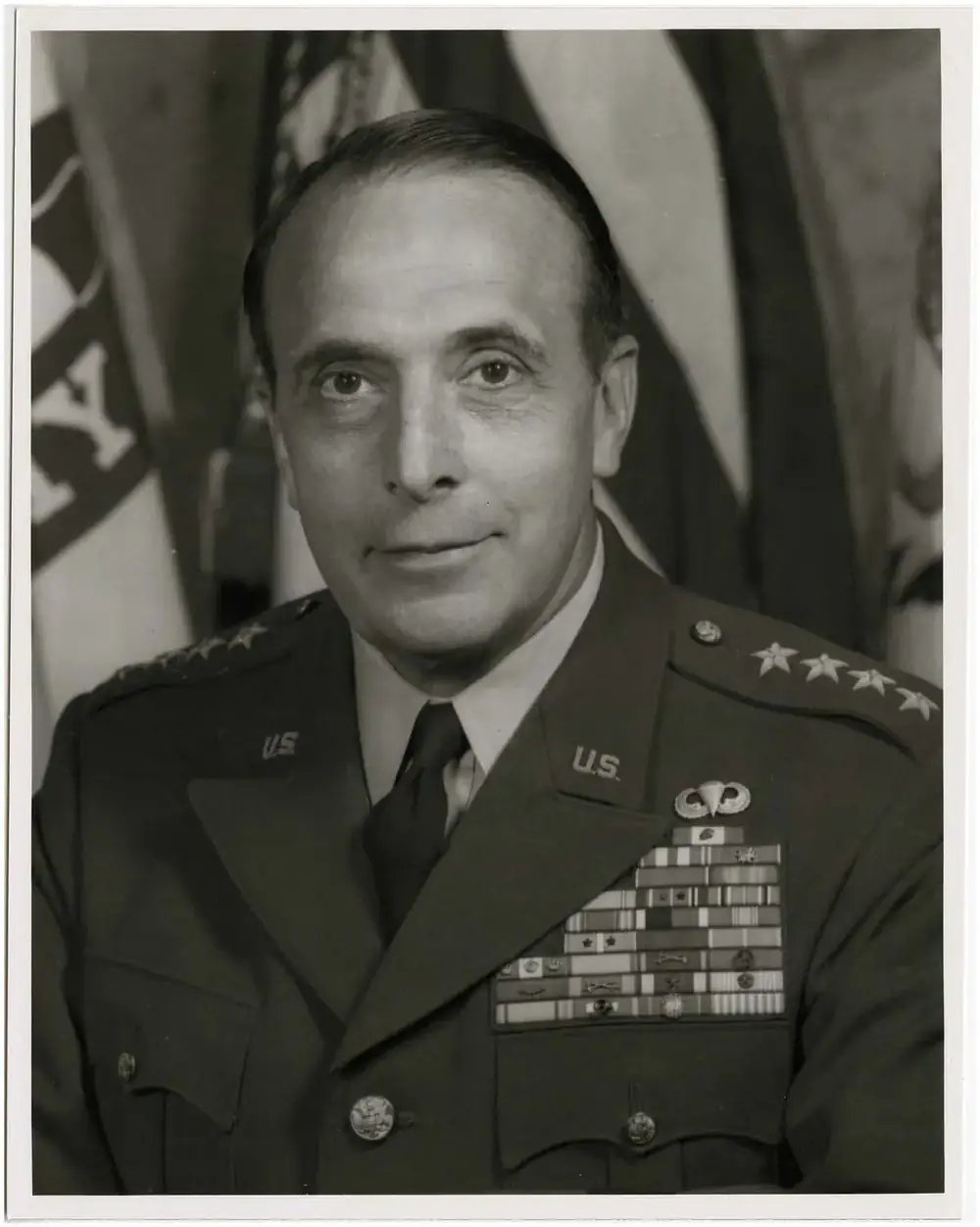
In the spring of 1961, a brigade of CIA-trained Cuban exiles landed at the Bay of Pigs and was quickly overwhelmed by Fidel Castro's forces. According to the official history of the Joint Chiefs of Staff, President John F. Kennedy came away believing the Chiefs had served him poorly, and the episode damaged his relationship with their chairman, Army Gen. Lyman Lemnitzer. Lemnitzer, the same history notes, considered the criticism unfair.
By early 1962 the administration had a new, secret Cuba effort, Operation Mongoose, whose operations were headed by Air Force Brig. Gen. Edward Lansdale. On March 5, 1962, Lansdale's office asked the Joint Chiefs for a "brief but precise description of pretexts" that they believed "would provide justification for US military intervention in Cuba." The phrase comes from the Joint Chiefs' own reply, which restates the request word for word.
"We could blow up a US ship in Guantanamo Bay and blame Cuba." (Joint Chiefs of Staff, Northwoods annex, March 1962)
The reply is dated March 13, 1962. It is a memorandum for Secretary of Defense Robert McNamara titled "Justification for US Military Intervention in Cuba," stamped TOP SECRET SPECIAL HANDLING NOFORN, and signed by Lemnitzer for the Joint Chiefs. Attached was a list of ideas under the codeword NORTHWOODS. The Chiefs added a caveat: their thinking would hold "only as long as there can be reasonable certainty that US military intervention in Cuba would not directly involve the Soviet Union."
An attached draft spelled out the goal. A plan built from the list would "enable a logical build-up of incidents to be combined with other seemingly unrelated events to camouflage the ultimate objective." The desired result was "to place the United States in the apparent position of suffering defensible grievances from a rash and irresponsible government of Cuba."
Then came the list itself, headed "Pretexts to Justify US Military Intervention in Cuba." A note at the top called the items "a preliminary submission suitable only for planning purposes," arranged "neither chronologically nor in ascending order."
The first ideas centered on the U.S. naval base at Guantanamo Bay. They included starting rumors over clandestine radio, landing "friendly Cubans in uniform" "over-the-fence" to stage an attack on the base, starting riots near the main gate, blowing up ammunition, burning aircraft, and sinking a ship near the harbor entrance, with "funerals for mock-victims."
Item 3 proposed a "Remember the Maine" incident, a reference to the 1898 sinking that helped spark the Spanish-American War. It contains the document's most quoted sentence: "We could blow up a US ship in Guantanamo Bay and blame Cuba." An alternative was to blow up an unmanned drone vessel in Cuban waters and then stage a rescue of the "non-existent crew." The paragraph ends: "Casualty lists in US newspapers would cause a helpful wave of national indignation."
Item 4 went further: "We could develop a Communist Cuban terror campaign in the Miami area, in other Florida cities and even in Washington." The memo suggested the campaign could be aimed at Cuban refugees. "We could sink a boatload of Cubans enroute to Florida (real or simulated)," it said, and could foster attempts on refugees' lives "even to the extent of wounding in instances to be widely publicized." Plastic bombs "in carefully chosen spots," arrests of Cuban agents and "prepared documents" would round out the picture.
Other items proposed a fake Cuban-backed raid on a neighboring Caribbean country, harassment of civilian air traffic by U.S. pilots flying MiG-type aircraft, and hijacking attempts made to appear to be condoned by Cuba.
The most elaborate idea, item 8, involved a chartered civilian airliner. An aircraft at Eglin Air Force Base in Florida would be painted and numbered as "an exact duplicate" of a civil aircraft belonging to "a CIA proprietary organization in the Miami area." Passengers, possibly "a group of college students off on a holiday," would board the duplicate under "carefully prepared aliases." South of Florida the two planes would meet. The passenger plane would drop to minimum altitude and land at an auxiliary field at Eglin, while the original, now an empty drone, would fly on over Cuba, broadcast a "MAY DAY" call saying it was under attack by Cuban MiGs, and be blown up by radio signal. As written, no passengers would die; the deception depended on the world believing they had.
Item 9 was a variation using Air Force F-101 jets out of Homestead Air Force Base. One pilot would radio that he had been "jumped by MIGs" and was going down, then fly low to a secure base and resume "his proper identity," while a submarine or small boat scattered F-101 parts and a parachute off the Cuban coast.
What happened next is less well documented. The plan was never carried out. ABC News, reporting on the documents in 2001, said the plans "apparently were rejected by the civilian leadership." Lemnitzer's tenure as chairman ended on September 30, 1962. The Joint Chiefs' official history says Kennedy, believing Lemnitzer was not innovative enough for the kind of counterinsurgency warfare the President favored, did not appoint him to a second term and instead nominated him as NATO's Supreme Allied Commander, Europe. That history does not mention Northwoods.
The documents stayed classified for more than three decades. They reached the public through the Assassination Records Review Board, created under the President John F. Kennedy Assassination Records Collection Act of 1992. In November 1997 the National Archives opened about 1,500 pages of Joint Chiefs records on Cuba policy that the board had reviewed, drawn partly from the files of chairmen Lemnitzer, Taylor and Wheeler. Journalist James Bamford described Northwoods in his 2001 book "Body of Secrets," ABC News reported on it that spring, and the National Security Archive posted the full memo online.
Since then, Northwoods has become one of the most cited documents in conspiracy circles, often offered as proof that the U.S. government could plan a false-flag attack on its own people. The document does show that the nation's top military leaders put such ideas in writing and sent them to the Secretary of Defense. It does not show that any of them were approved or carried out, and the record contains no evidence that they were.
Origins
The Joint Chiefs wrote it in March 1962 in answer to a request from Operation Mongoose, the covert Cuba program. It stayed classified until the Assassination Records Review Board process in the 1990s.
The Claims
- The military proposed staging attacks, including some on U.S. soil and against Cuban refugees, and blaming them on Cuba to justify war.
Key Evidence
- The declassified March 13, 1962 memo to Secretary of Defense McNamara, signed by Joint Chiefs Chairman Lyman Lemnitzer, lists pretexts including blowing up a U.S. ship, a "Communist Cuban terror campaign" in Florida and Washington, and faking the shootdown of a civilian airliner.
- None of the proposals was carried out. ABC News reported in 2001 that they "apparently were rejected by the civilian leadership."
Documents & Sources
- Gov DocumentDeclassified DocumentJoint Chiefs memo "Justification for US Military Intervention in Cuba," 13 March 1962 (PDF scan, National Security Archive) nsarchive2.gwu.edu ↗
- AcademicJoint Chiefs pretexts memo, with context (National Security Archive) nsarchive.gwu.edu ↗
- Gov DocumentOfficial RecordGen. Lyman L. Lemnitzer, official biography (Joint Chiefs of Staff) jcs.mil ↗
- Gov DocumentOfficial RecordNational Archives releases Joint Chiefs Cuba records reviewed by the Assassination Records Review Board, November 1997 archives.gov ↗
- NewsU.S. Military Wanted to Provoke War With Cuba (ABC News, 2001) abcnews.go.com ↗
Each link was checked for availability on Oct. 27, 2026. Links open in a new tab.