Operation Ivy Bells: The Navy's Wiretap on a Soviet Undersea Cable
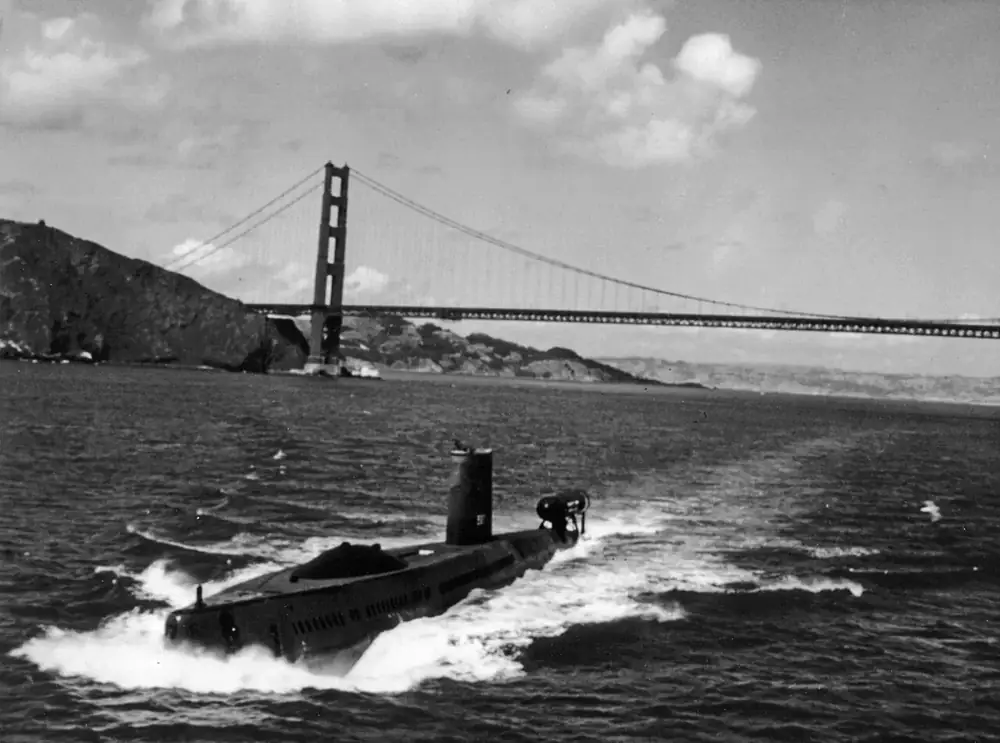
Ivy Bells was a U.S. operation to tap a Soviet undersea cable in the Sea of Okhotsk. NSA's own Cold War history, declassified in 2024, confirms the tap and says former NSA employee Ronald Pelton described it to a KGB officer in 1980. Pelton was convicted of espionage in 1986, and a federal appeals court upheld his convictions.
Verdict: Confirmed. This one really happened. The core events are documented in the official records and reporting cited below. How we rate stories
The Story
On January 14, 1980, FBI surveillance recorded a phone call to the Soviet embassy in Washington. The caller would not give his name. 'I have something I would like to discuss with you I think that would be very interesting to you,' he said. 'I am in, with the United States government.'
The next afternoon, according to NSA's own internal history, the man phoned again, said he would be there in two minutes, and walked straight into the embassy. FBI watchers got only a picture of his back.
NSA's history: 'the undersea tap operation, called Ivy Bells, had been known to only a few employees.'
Inside, the duty officer happened to be a KGB colonel, Vitaly Yurchenko. The visitor pulled out an NSA personnel summary 'and began discussing highly sensitive operations to tap a Soviet cable running under the Sea of Okhotsk from the Kamchatka Peninsula to the vicinity of Vladivostok.' The KGB smuggled him out disguised as a Soviet workman, with $500 and instructions for the next contact.
That cable tap was Ivy Bells, a U.S. operation listening in on Soviet military communications on the seabed. NSA's history says it 'had been known to only a few employees.'
For five years nobody knew who the walk-in was. Then, in 1985, Yurchenko defected to the United States and recalled a former NSA employee the KGB had code-named 'Long.' NSA started with 954 names, narrowed them to twelve, and played the 1980 tapes to supervisors. The fourth listener recognized the voice: Ronald W. Pelton.
Pelton, the appeals court notes, had worked at NSA from 1965 to 1979 on 'highly classified information concerning the interception and interpretation of Soviet transmissions,' and left after financial problems and bankruptcy. NSA's history adds that he had 'a nearly photographic memory.' From 1980 through 1983 he met Soviet agents in Washington and Vienna and, the court says, 'was paid more than $35,000.' NSA's history says he first asked for $400,000.
On November 24, 1985, two FBI agents met Pelton at the Annapolis Hilton and told him a 'hypothetical' story about a former NSA official who sold secrets, with every detail matching his life. He talked. That evening, NSA's history says, 'Pelton placed an X on a map showing where the undersea cable tap was.' (His mark was off by a considerable distance.) He was arrested.
At trial in 1986, NSA for the first time revealed in open court that the Soviet Union was a signals intelligence target, and showed jurors the map. The jury convicted Pelton of espionage and related charges. He was sentenced to three life terms plus ten years, and in December 1987 the U.S. Court of Appeals for the Fourth Circuit affirmed.
NSA's verdict, in its own history, was blunt: Pelton was 'the most damaging cryptologic spy since William Weisband in the 1940s.' Ivy Bells is confirmed.
Origins
The tap became public through Pelton's 1986 espionage trial in Baltimore. NSA's internal history, American Cryptology during the Cold War, 1945-1989, Book IV (1999), released by the National Archives on November 8, 2024 after a declassification appeal, describes the case from NSA's side.
The Claims
- The U.S. secretly tapped Soviet military lines under the sea.
- A spy sold the secret to the Soviets.
- The Soviets found and removed the tap.
Key Evidence
- NSA's history says that in January 1980 a walk-in at the Soviet embassy in Washington 'began discussing highly sensitive operations to tap a Soviet cable running under the Sea of Okhotsk from the Kamchatka Peninsula to the vicinity of Vladivostok.'
- It names the operation: 'the undersea tap operation, called Ivy Bells.' NSA identified the walk-in as Ronald W. Pelton.
- The Fourth Circuit records that Pelton worked for NSA from 1965 to 1979, met Soviet agents from 1980 through 1983, and 'was paid more than $35,000.' He was sentenced to 'three life terms plus ten years imprisonment.'
The Evidence Against
- The tap and the betrayal are confirmed by NSA's own history and the court record.
- How the device was placed and retrieved, and exactly when and how the Soviets removed it, are not described in the released official records used here, so this entry does not describe them.
- The records differ slightly on the sentence: the NSA history says 'three consecutive life terms plus ten years,' while the appeals court says 'three life terms plus ten years.'
Documents & Sources
- Gov DocumentDeclassified DocumentNSA, American Cryptology during the Cold War, 1945-1989, Book IV: Cryptologic Rebirth, Part 3 (ISCAP release, Nov. 8, 2024) archives.gov ↗
- Gov DocumentDeclassified DocumentNSA, American Cryptology during the Cold War, 1945-1989, Book IV, Part 4 (ISCAP release, Nov. 8, 2024) archives.gov ↗
- Court RecordOfficial RecordUnited States v. Pelton, 835 F.2d 1067 (4th Cir. 1987) law.resource.org ↗
Each link was checked for availability on Oct. 27, 2026. Links open in a new tab.