The Mandela Effect: False Memories or Shifting Realities?
Large numbers of people share the same specific false memories, such as the spelling of 'The Berenstain Bears.' Some suggest this is proof of parallel universes. Psychologists study it as shared false memory, and a 2022 study confirmed the effect for certain images.
Verdict: Unproven. The sources below do not establish this claim. That is not the same as proving it false. How we rate stories
The Story
Dictionary.com says the paranormal researcher Fiona Broome named the 'Mandela effect' in 2009, after an experience she shared with others. They all falsely remembered that Nelson Mandela had died in prison in the 1980s. In reality he was released in 1990 and died in 2013.
Many other shared false memories have been found since. People remember the children's books as 'The Berenstein Bears,' when the name is spelled 'Berenstain.' Some remember a 1990s genie film called 'Shazaam' starring the comedian Sinbad, when the real film was 'Kazaam,' starring Shaquille O'Neal. Many picture the Monopoly mascot with a monocle, though he has never worn one.
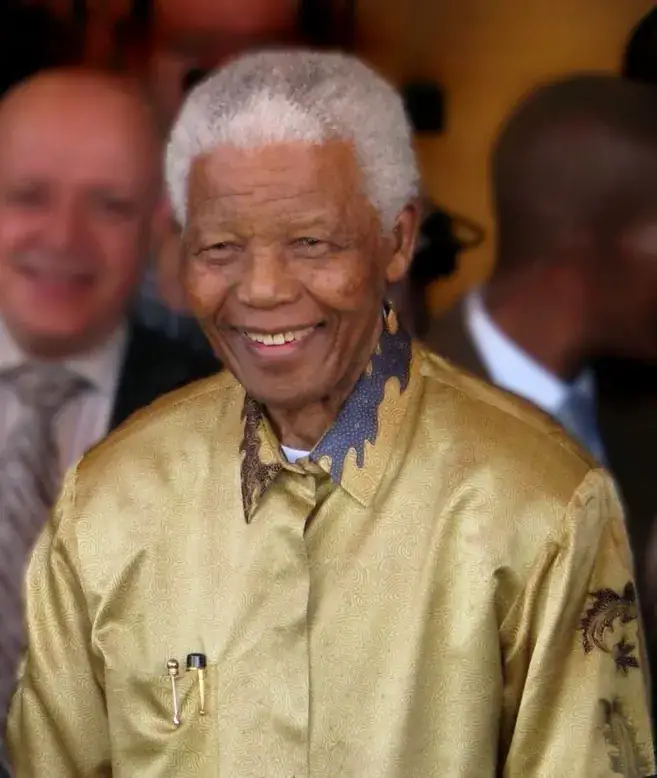
Nelson Mandela was released in 1990 and died in 2013. Many people 'remember' him dying in prison in the 1980s.
For some people, the most exciting explanation is that the memories are accurate and the world has changed, perhaps because they slipped between parallel universes. None of the sources here offers any scientific evidence for that.
Psychologists look instead at how memory works. One idea, called schema theory, holds that we fill gaps with what we expect. A monocle, for example, fits an image of wealth.
In 2022, Wilma Bainbridge and Deepasri Prasad of the University of Chicago published the first scientific study of the phenomenon in Psychological Science. They found that certain images 'elicit consistent, specific false memories.' People were often confident in the wrong version, such as Pikachu with a black-tipped tail, even when they said they knew the character well. 'You've never seen Pikachu with a black tip on the tail,' Bainbridge said.
The researchers had not pinpointed a single cause, but they ruled out schema theory as a universal explanation. Many people falsely remember a cornucopia behind the Fruit of the Loom logo, and choose it over a plate, even though plates are more often associated with fruit.
The Mandela effect is real in the sense that large groups of people share the same false memories. No explanation beyond the workings of the human mind has been demonstrated.
Origins
According to Dictionary.com, the paranormal researcher Fiona Broome named the Mandela effect in 2009. She and others had falsely remembered that Nelson Mandela died in prison in the 1980s. In fact he was released in 1990 and died in 2013.
The Claims
- Large numbers of people remember the same details differently from the historical record.
- Some believers say this shows that reality has shifted, or that people have moved between parallel universes.
Key Evidence
- The shared misremembering is real. Many people recall 'Berenstein Bears' rather than the correct 'Berenstain,' or a monocle on the Monopoly mascot, which he has never worn.
- A 2022 study in Psychological Science found that certain images from popular culture produce 'consistent, specific false memories.'
The Evidence Against
- None of the sources here offers any scientific evidence of parallel universes or shifting timelines.
- Psychologists treat these errors as false memories. The 2022 researchers had not pinpointed a single cause, but they ruled out some simple explanations.
Documents & Sources
- StudyThe Visual Mandela Effect as Evidence for Shared and Specific False Memories Across People (Psychological Science, 2022) journals.sagepub.com ↗
- ReferenceThe Mandela Effect, Streisand Effect, and Other 'Effects' (Dictionary.com) dictionary.com ↗
- OfficialCan you pick out the correct version of these famous pop culture icons? (University of Chicago News, 15 July 2022) news.uchicago.edu ↗
Each link was checked for availability on Oct. 27, 2026. Links open in a new tab.