JFK Assassination
The theory that Lee Harvey Oswald did not act alone when President John F. Kennedy was killed in Dallas on 22 November 1963.
Verdict: Unproven. The sources below do not establish this claim. That is not the same as proving it false. How we rate stories
The Story
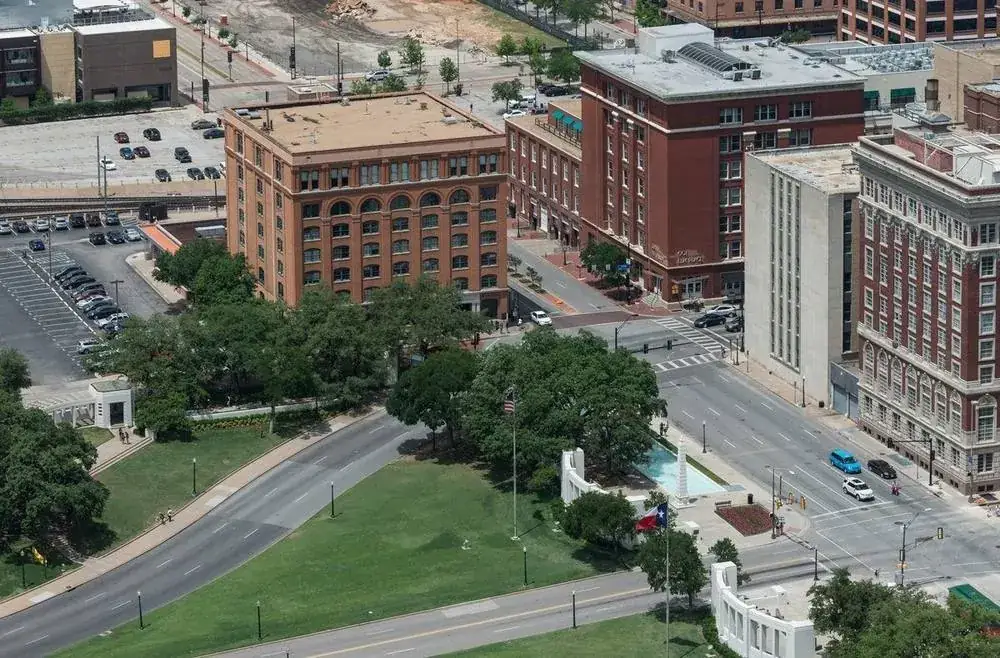
At about 12:30 p.m. on Friday, 22 November 1963, President John F. Kennedy's open car turned onto Elm Street in Dallas, passing the Texas School Book Depository. Kennedy and Jacqueline Kennedy were in the back seat. Texas Governor John Connally and his wife were in the jump seats in front of them.
Shots were fired. According to the Warren Commission, one bullet struck Kennedy and another struck him in the rear of the head. Connally was seriously wounded. At Parkland Hospital, Kennedy was pronounced dead at 1 p.m. Connally later recovered.
In 1964 the commission said Oswald acted alone. In 1979 a House committee said 'probably' not.
Dallas police arrested Lee Harvey Oswald, who worked at the depository. The Commission concluded that the shots were fired from a sixth-floor window, using a Mannlicher-Carcano rifle owned by Oswald. It also found that Oswald killed Dallas patrolman J. D. Tippit about 45 minutes after the assassination. Oswald had earlier defected to the Soviet Union.
Oswald never stood trial. On Sunday, 24 November, during his transfer from the city jail, Dallas nightclub operator Jack Ruby shot him. Oswald was pronounced dead at Parkland Hospital at 1:07 p.m.
The Warren Commission concluded that Oswald acted alone. It said there was 'very persuasive evidence' that the bullet which went through the President's throat also caused Connally's wounds, while acknowledging 'some difference of opinion' on that point. Critics later called this the 'magic bullet.' The Commission found no evidence that Ruby had acted with anyone else.
In 1979 the House Select Committee on Assassinations agreed that Oswald fired three shots and that two of them hit the President. But relying on acoustic analysis of a police recording, it also found a 'high probability' that two gunmen fired. It concluded that Kennedy was 'probably assassinated as a result of a conspiracy,' but it could not identify the other gunman or how far any conspiracy extended.
A National Academies committee re-examined the acoustic evidence in 1982. It concluded that the sounds were recorded about a minute after the shooting and that the data do not support a second gunman. Since then, suspects named in alternative theories have included the CIA, the Mafia, Cuba and the Soviet Union. None of these theories is supported by an official finding.
Files that had been held back were released in 2025. The National Archives says it released them without redactions after a presidential directive in March 2025, and further releases followed into 2026. Public interest in the case remains strong more than six decades later.
Origins
In 1964 the Warren Commission concluded that Oswald acted alone. Oswald himself was shot dead two days after the assassination, so he never stood trial. In 1979 a House committee concluded that a conspiracy was probable. That finding, and decades of government secrecy, kept other theories alive.
The Claims
- A second gunman fired at the President.
- The CIA, the Mafia, Cuba or the USSR was involved.
- One bullet could not have caused all the wounds the Warren Commission attributed to it.
Key Evidence
- The House Select Committee on Assassinations concluded that Kennedy 'was probably assassinated as a result of a conspiracy.' It said that 'scientific acoustical evidence establishes a high probability that two gunmen fired.'
- The same committee found that the earlier investigation 'into the possibility of conspiracy in the assassination was inadequate.'
- Files withheld for decades were released in 2025. The National Archives says they were released 'without redactions.'
The Evidence Against
- A National Academies committee (1982) concluded that 'reliable acoustic data do not support a conclusion that there was a second gunman.' It said the sounds were recorded 'about one minute after the President had been shot.'
- The House committee also found that Oswald fired three shots, and that the second and third hit the President. The committee was unable to identify any other gunman.
- The Warren Commission found 'no evidence that Jack Ruby acted with any other person' when he killed Oswald.
Documents & Sources
- OfficialWarren Commission Report, Chapter 1: Summary and Conclusions (National Archives) archives.gov ↗
- OfficialHouse Select Committee on Assassinations Report (National Archives) archives.gov ↗
- OfficialReport of the Committee on Ballistic Acoustics (National Academies, 1982) nap.nationalacademies.org ↗
- OfficialJFK Assassination Records: 2025 Documents Release (National Archives) archives.gov ↗
Each link was checked for availability on Oct. 27, 2026. Links open in a new tab.