The Bermuda Triangle
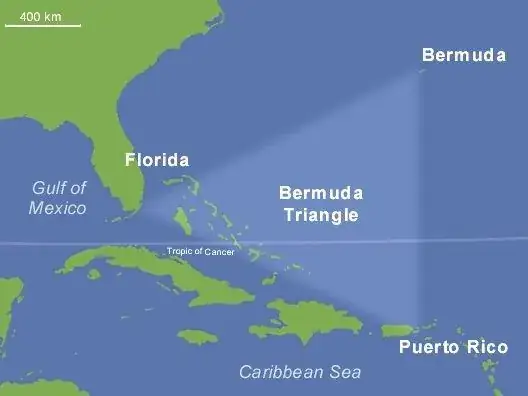
The Bermuda Triangle is a stretch of the western North Atlantic where ships and planes are said to vanish mysteriously. NOAA says 'There is no evidence that mysterious disappearances occur with any greater frequency in the Bermuda Triangle than in any other large, well-traveled area of the ocean.'
Verdict: Debunked. The weight of the evidence cited below contradicts this claim. How we rate stories
The Story
Shortly after 2 p.m. on 5 December 1945, five TBM Avenger torpedo bombers left Naval Air Station Fort Lauderdale, Florida, on a routine navigation training flight. The Naval History and Heritage Command (NHHC) says the leader, Lt. Charles C. Taylor, was a seasoned aviator with some 2,500 flying hours and combat tours in the Pacific. The flight, known as Flight 19, was to fly east, make practice bombing runs, turn north over Grand Bahama Island and return to base.
The bombing runs went as planned. Then things went wrong. Records summarized by the National Archives show Taylor radioing that both his compasses were out and that he was sure he was over the Florida Keys. 'At the time Taylor made this call, he was well northeast, rather than southwest of Ft. Lauderdale as he thought,' the Archives says. For the next two hours the flight changed direction repeatedly. By 5:30 p.m. the sun had set, the weather was worsening, and the planes were low on fuel. The last transmission monitored from the flight, at 7:04 p.m., was Taylor telling the others they would have to ditch together.
'There is no evidence that mysterious disappearances occur with any greater frequency in the Bermuda Triangle than in any other large, well-traveled area of the ocean,' NOAA says.
Rescue aircraft went out. One of them, a PBM Mariner flying boat, exploded in the air, killing the 13 men aboard. NHHC says the five-day search covered more than 250,000 square miles but found 'no aviators, wreckage, life raft, or even an oil slick.' Fourteen men were lost from Flight 19 and thirteen from the rescue plane.
The Navy concluded that Flight 19 got lost through pilot error, with Taylor 'uncertain as to in what position lay the Peninsula of Florida,' forcing a ditching in darkness and bad weather. It blamed the rescue plane's loss on a faulty fuel system. The National Archives says these explanations 'are clear and concise, yet they leave something in the mind that does not satisfy,' and that 'that's where the myths come in.'
Flight 19 became the centerpiece of the Bermuda Triangle legend, a loosely defined patch of ocean where, NOAA says, ships, planes and people 'are alleged to have mysteriously vanished.' Proposed causes range from extraterrestrials and the lost continent of Atlantis to vortices into other dimensions. The Archives notes that Flight 19 even reappeared, 'neither aged nor damaged,' in the 1977 film Close Encounters of the Third Kind.
NOAA says ordinary forces explain the record. Most Atlantic tropical storms and hurricanes pass through the area, the Gulf Stream can bring rapid and violent weather changes, and the Caribbean's many islands create treacherous shallows. The U.S. Board of Geographic Names does not recognize the Bermuda Triangle as an official name, and NOAA's bottom line is plain: 'There is no evidence that mysterious disappearances occur with any greater frequency in the Bermuda Triangle than in any other large, well-traveled area of the ocean.'
Origins
The legend's best-known case is Flight 19, five Navy Avenger torpedo bombers lost on a training flight from Fort Lauderdale on 5 December 1945, along with a rescue plane sent after them. The National Archives says that because the aircraft were lost in an area known as the Bermuda Triangle, 'years and layers of rumor, gossip, folklore, and legend have relegated Flight 19 to the realm of myth.'
The Claims
- Ships and planes disappear in the Triangle more often than elsewhere.
- The losses are caused by unknown forces: aliens, Atlantis, vortices or strange magnetism.
Key Evidence
- Real losses have happened there. Flight 19 and a rescue flying boat were lost on 5 December 1945, killing 27 men, and NHHC says no aviators, wreckage or life raft were found.
- NOAA notes 'some evidence to suggest that the Bermuda Triangle is a place where a "magnetic" compass sometimes points towards "true" north.'
The Evidence Against
- NOAA: 'There is no evidence that mysterious disappearances occur with any greater frequency in the Bermuda Triangle than in any other large, well-traveled area of the ocean.'
- NOAA says 'Environmental considerations could explain many, if not most, of the disappearances,' citing hurricanes, the Gulf Stream's rapid weather changes and shallow Caribbean waters. It says the U.S. Navy and Coast Guard 'contend that there are no supernatural explanations for disasters at sea.'
- NOAA also says the U.S. Board of Geographic Names 'does not recognize the Bermuda Triangle as an official name.'
- According to the National Archives, the Navy's investigation concluded Flight 19 got lost through pilot error, and that a faulty fuel system caused the rescue plane's explosion.
Documents & Sources
- Gov DocumentOfficial RecordWhat is the Bermuda Triangle? (NOAA National Ocean Service) oceanservice.noaa.gov ↗
- Gov DocumentOfficial RecordThe Loss of Flight 19 (Naval History and Heritage Command) history.navy.mil ↗
- Gov DocumentOfficial Record"Uncertain as to in what position lay the Peninsula of Florida": The Official Record and the Loss of Flight 19 (National Archives, Pieces of History, 2017) prologue.blogs.archives.gov ↗
Each link was checked for availability on Oct. 27, 2026. Links open in a new tab.